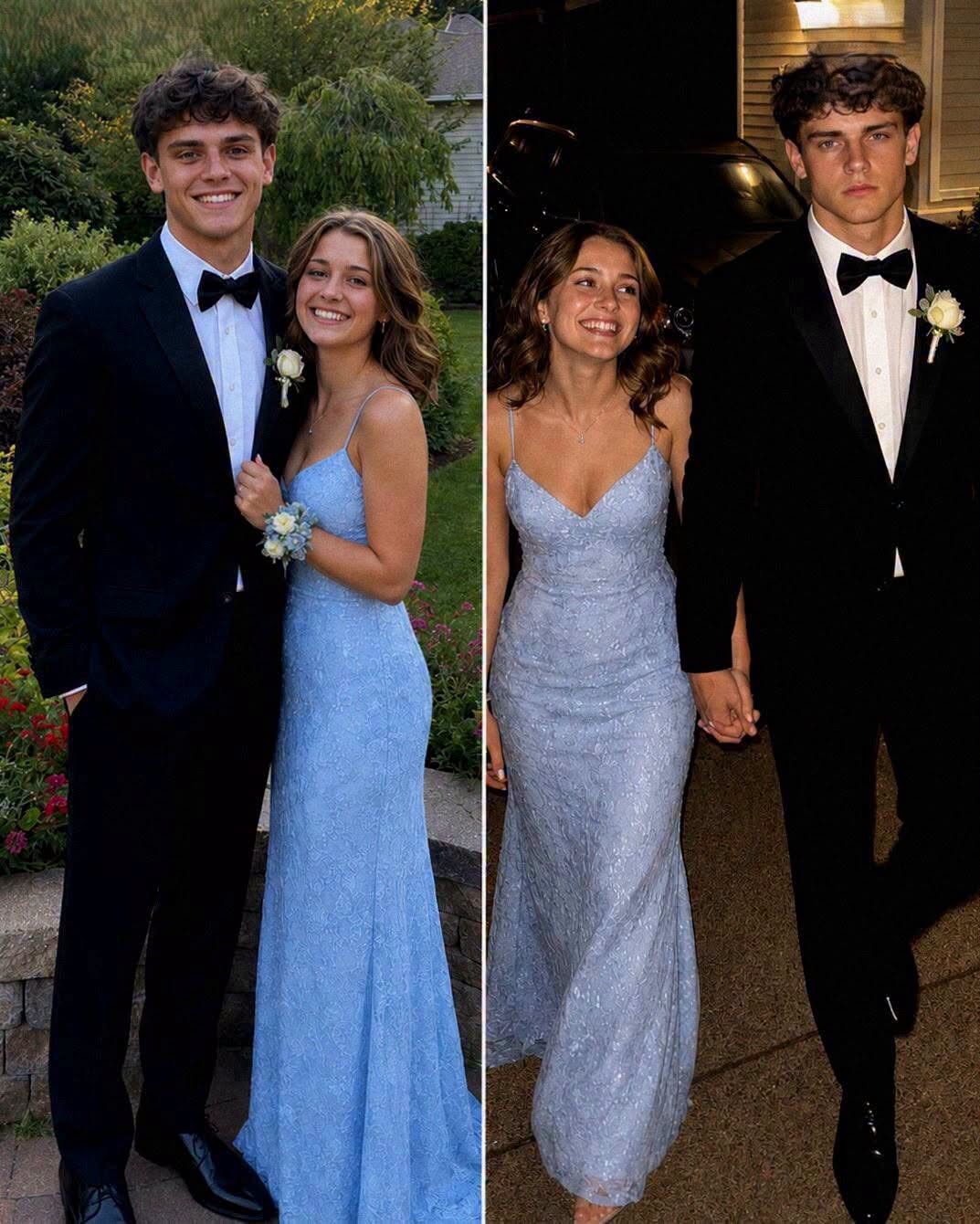
The yellow flyer lay on the oilcloth table right next to my toast, its bright paper reflecting the morning sun. Iris leaned over the back of my chair, her breath smelling of peppermint toothpaste.
The flyer was for the Millfield High School senior prom, scheduled for the third Saturday in May.
“Everyone is going to the country club this year, Mom,” Iris said, her voice rising at the end of the sentence like a question.
She twirled a strand of her dark hair around her index finger, wrapping it tight until her fingertip turned white.
“The tickets are forty dollars each,” I said.
I slid my thumb over the gold wedding band I wore on my right pinky finger, turning the worn metal twice.
“They have a chocolate fountain, and the committee hired a real photographer from Columbus,” she said, her words crowding together in a rush.
The old Kenmore refrigerator gave a heavy shudder, its motor clattering to a halt in the corner of our small kitchen.
I looked down at the flyer, noting the date.
“Forty dollars is just the start of it,” I said, keeping my voice even.
“We can find a dress at the consignment shop in Oakhaven,” she said. The yellow flyer lay on the oilcloth table right next to my toast, its bright paper reflecting the morning sun. Iris leaned over the back of my chair, her breath smelling of peppermint toothpaste.
The flyer was for the Millfield High School senior prom, scheduled for the third Saturday in May.
“Everyone is going to the country club this year, Mom,” Iris said, her voice rising at the end of the sentence like a question.
She twirled a strand of her dark hair around her index finger, wrapping it tight until her fingertip turned white.
“The tickets are forty dollars each,” I said.
I slid my thumb over the gold wedding band I wore on my right pinky finger, turning the worn metal twice.
“They have a chocolate fountain, and the committee hired a real photographer from Columbus,” she said, her words crowding together in a rush.
The old Kenmore refrigerator gave a heavy shudder, its motor clattering to a halt in the corner of our small kitchen.
I looked down at the flyer, noting the date.
“Forty dollars is just the start of it,” I said, keeping my voice even.
“We can find a dress at the consignment shop in Oakhaven,” she said.
“Oakhaven is twenty miles away, Iris.”
“But they have the good ones, Mom, the ones girls only wear once.”
She stopped spinning her hair and pressed her palms flat against the laminate tabletop.
“Who is asking you?” I asked.
She looked toward the window, her gaze fixing on the gravel driveway where our rusty Buick sat.
“His name is Ryan,” she said, her voice lifting on the name.
The name did not sound familiar, but a cold prickle of heat started at the back of my neck.
“Is he in your English class?” I asked.
“He just moved here last semester from the county line,” she said.
I stood up to clear the butter plate, wanting an excuse to turn my back on her wide, hopeful eyes.
“We will have to see about the budget,” I said.
“He is really nice, Mom, and he drives a real car, not an old boat like ours.”
She took the flyer off the table, folded it into a small square, and tucked it into her cardigan pocket.
“I have to catch the bus,” she said, already moving toward the screen door.
“Do not leave your lunch on the counter,” I said.
She grabbed the brown paper bag and was gone, the screen door bouncing twice against the frame.
I stood by the sink, my hand resting on my pinky finger, listening to the gravel crunch under her sneakers as she ran for the corner.
The clock on the microwave read ten past eight. By ten o’clock, the morning fog had cleared from the pine trees, leaving the porch railing damp and cold.
My sister, Martha, sat on the wicker bench with her knees pulled together, her gravelly voice cutting through the quiet of our yard.
“She is eighteen, Nora,” Martha said.
She adjusted her reading glasses on the bridge of her nose, sliding them up with a blunt forefinger.
“She is still in high school,” I said.
“She is old enough to register to vote, and she is old enough to know why she does not have a father.”
“We settled that sixteen years ago,” I said, my voice dropping an octave.
“You settled it with a lawyer and a signature,” Martha said.
She leaned forward, her eyes narrowing behind her thick lenses.
“The boy she is talking about, this Ryan, he lives over by the old mill,” Martha said.
“What does that have to do with us?” I asked.
“His stepfather is Arthur,” Martha said. My hand went straight to my pinky finger, gripping the gold band so hard the metal bit into my skin.
“Arthur is in Oakhaven,” I said.
“Arthur bought the house by the creek two years ago, Nora.”
“He signed the papers, Martha. He agreed to stay away.”
“He is a good boy, Nora, but you cannot hide from the town forever,” Martha said.
She stood up, her joints popping in the quiet morning air.
“You think he does not know where his daughter is?” Martha asked.
“He took the money,” I said.
“Money does not keep a man from looking at a map,” Martha said.
She walked down the porch steps, her orthotic shoes crunching on the gravel path.
“I have groceries to put away,” she said without looking back.
I stayed on the porch, watching her walk toward her own house down the road.
The damp pine smell was thick in the air, reminding me of the spring we built the cottage. At two o’clock, the house was entirely silent.
I went into the living room and pulled the yellow duster from the closet.
On the mantle sat the framed photograph of Iris when she was two, her cheeks round and her hair just starting to curl.
Next to it was the silver pocket watch Arthur had left on the dresser the night he packed his cardboard boxes.
The silver was tarnished, turning a dark, oily gray around the hinges.
I took the watch down and rubbed the metal with the corner of my apron until my thumb felt warm.
The engraving on the back was still clear: *To A. from N. 2004.*
I remembered the day I decided to raise Iris by myself, standing in the empty hallway of our first apartment while the landlord changed the locks.
I had forty-two dollars in my purse and a diaper bag that smelled of sour milk.
I did not want his excuses, and I did not want his debts.
I set the pocket watch back on the lace runner, aligning it exactly with the edge of the wood.
The glass face of the watch was cracked across the center, a tiny hairline fracture that divided the numbers two and eight.
I had kept that watch in a drawer for fifteen years before putting it on the mantle.
I heard the yellow school bus brake at the corner, its air brakes hissing in the afternoon quiet. He nodded, sliding a stack of local newspapers into a wooden bin.
“They grow up fast,” he said. “Seems like yesterday she was running around here in her little yellow boots.”
I folded the envelope under my arm and walked out to the gravel parking lot, where my old Buick was idling with its familiar low rattle.
The morning sun was bright, but it did not warm the steering wheel as I sat there, holding the manila envelope against my lap.
I drove home slowly, keeping my speed exactly at twenty-five, watching the rearview mirror at every turn.
Martha, my older sister, was already sitting at my kitchen table when I got home at eleven.
She had let herself in through the back, as she always did, and had a mug of black coffee sitting between her hands on the clean wood.
She did not look up when I let myself in through the screen door.


0 commentaires:
Enregistrer un commentaire