Top Ad 728x90

samedi 12 septembre 2026

Amazon cargo jet tried to abort unsteady landing before Miami crash that killed 5, per flight data.. Story linked in the comments.

by


 Amazon Cargo Jet Tried to Abort Unsteady Landing Before Deadly Miami Crash, Flight Data Shows               


What began as a routine cargo flight from Puerto Rico to Miami ended in one of the most devastating aviation accidents in South Florida in recent memory.


An Amazon Air cargo aircraft operated by 21 Air overran a runway at Miami International Airport on September 6, 2026, striking vehicles on the ground and killing five people. Now, newly released information from federal investigators is beginning to reveal what happened during the final seconds before the crash.


According to the National Transportation Safety Board, cockpit and flight-data recordings indicate that the Boeing 767 was approaching the runway at excessive speed, touched down, and then appeared to initiate a last-second attempt to abort the landing.


The maneuver, known in aviation as a go-around, is a standard safety procedure. When a landing is no longer considered safe, pilots can add engine power, climb away from the runway and attempt another approach.


But in this case, the available data suggests the decision came extremely late.


The aircraft had already touched down. Its brakes had been applied and then released. The throttles were subsequently increased to a setting consistent with go-around thrust before the pilots reduced power and reapplied the brakes. The aircraft then left the paved runway area.


The NTSB emphasized that the information remains preliminary and could change as investigators continue their work.


Still, the findings provide a remarkable glimpse into the final moments of Flight 7598.


A Routine Flight Turns Into a Disaster


The aircraft was a Boeing 767-33A operated by Miami-based 21 Air on behalf of Amazon Air. It was flying from San Juan, Puerto Rico, to Miami International Airport on the afternoon of September 6.


The flight itself was not unusual. Cargo aircraft arrive and depart from Miami throughout the day, transporting thousands of packages and commercial goods across the country and internationally.


But as Flight 7598 approached Miami, the situation became increasingly difficult.


According to information later recovered from the cockpit voice recorder, one of the pilots repeatedly warned that the aircraft was moving too quickly. About one minute and 42 seconds before the end of the recording, a pilot cautioned that the plane was too fast. The pilot continued making comments about the aircraft's excessive speed throughout the remainder of the recording.


That detail is now one of the central questions in the investigation.


Why was the aircraft still traveling so fast so close to the runway?


And once the pilots recognized the problem, why was the decision to go around made only after touchdown?


Investigators will have to reconstruct the sequence second by second before they can answer those questions.


The Final Approach


The NTSB has released a preliminary timeline from the cockpit voice recorder.


About four minutes before the end of the recording, the crew checked in with Miami tower and received clearance to land on Runway 30.


As the aircraft descended, the pilots configured the airplane for landing by progressively extending its flaps and lowering the landing gear.


But approximately one minute and 42 seconds before the end of the recording, one pilot warned that the aircraft was too fast.


The warnings continued.


The cockpit's automated warning system also issued a series of alerts, including calls associated with sink rate, minimums and terrain. Some terrain warnings were repeated during the approach.


Those details do not, by themselves, establish exactly why the approach became unstable. Aviation accidents are rarely caused by a single isolated event. Investigators typically examine weather, aircraft configuration, speed, altitude, runway conditions, crew communications, air-traffic-control instructions, mechanical systems and human decision-making.


In this case, all of those factors are likely to receive careful attention.


The Aircraft Touched Down


The NTSB's flight-data recorder provides an even more precise picture.


Approximately 30 seconds before the end of the FDR recording, the aircraft's nose and right main landing gear touched down at a groundspeed of about 158 knots.


Braking began shortly afterward, when the aircraft was traveling about 146 knots.


The left main landing gear touched down approximately 19 seconds before the recording ended at a groundspeed of about 134 knots.


Those numbers demonstrate just how much speed the aircraft still carried during the landing sequence.


Then came the critical moment.


Approximately 15 seconds before the end of the FDR recording, the brakes were released and the throttles were increased to a setting consistent with go-around thrust.


That strongly suggests the crew was attempting to reject the landing.


But the maneuver did not succeed.


Only four seconds later, the throttles were reduced to idle and the brakes were reapplied. At that point, the aircraft was still moving at about 117 knots.


The plane continued off the runway.


The FDR recorded significant changes in acceleration, with the aircraft still moving at approximately 96 knots.


The recording finally ended with a groundspeed of about 65 knots.


The NTSB said there was no indication in the recorded data that the aircraft's speed brakes or thrust reversers had been deployed.


A Go-Around Came Too Late


In ordinary circumstances, a go-around is one of aviation's most important safety tools.


A pilot does not have to continue an unsafe landing.


If the aircraft is too high, too low, too fast, misaligned with the runway or affected by unexpected weather, the crew can increase power and climb away rather than force the airplane onto the ground.


But a go-around has to be initiated while there is enough time and space to perform it safely.


That is why the timing of the decision in Miami is so important.


The cockpit voice recorder indicates that one of the pilots called for a go-around about 15 seconds before the end of the recording, while the FDR shows the throttles were increased in a manner consistent with go-around thrust.


Yet the plane had already touched down.


The aircraft therefore had only a very short window to transition from landing to climbing away.


Instead, the sequence changed again. The throttles were reduced to idle, braking resumed and the aircraft continued moving rapidly toward the end of the runway.


What caused that change in strategy is one of the questions investigators will need to answer.


Five People Were Killed on the Ground


The tragedy did not end with the aircraft leaving the runway.


The Boeing 767 continued beyond the paved surface and struck a Ford Econoline van used by an aviation cleaning company.


Seven people were inside the van.


Five died.


Authorities identified the victims as Rolando Aleman Leon, 55; Yoel Rodriguez Naranjo, 53; Julio C. Pineda, 75; Carlos Acosta Fajardo, 53; and Javierkys Reyes Quevedo, 47.


The five victims were not passengers aboard the aircraft.


They were people working on the ground.


That fact has added another heartbreaking dimension to the investigation, because the people who died were simply carrying out their jobs when an aircraft crossed into their path.


The aircraft also struck a vehicle beyond the airport perimeter.


Five people were injured in the overall crash, while the two pilots survived and were later released from the hospital.


For families waiting for loved ones to come home, the afternoon that began like any other workday suddenly became a life-changing tragedy.


The Wreckage Told Its Own Story


Investigators arriving at the crash site found extensive destruction.


The airplane traveled roughly 1,300 feet beyond the runway before coming to rest. It crossed through areas beyond the runway and damaged vehicles in the process.


NTSB Chair Jennifer Homendy described the scene in stark terms during an early briefing, noting extensive debris and severe damage to both the aircraft and the vehicles involved.


The airplane ultimately came to rest with its nose down and tail elevated, while parts of the aircraft and vehicles were scattered around the area.


For accident investigators, a crash site like this becomes an enormous puzzle.


Every piece of debris can potentially tell a story.


The position of aircraft components can help investigators reconstruct movement. Tire marks can show braking and direction. Damage patterns can provide clues about speed and impact angles. Electronic systems can reveal what the aircraft was doing in the moments before the accident.


But all of those pieces must be examined together.


The Black Boxes Are Providing Crucial Evidence


The NTSB recovered both major flight recorders from the wreckage: the cockpit voice recorder and the flight data recorder.


They were transported to the agency's Vehicle Recorder Laboratory in Washington, where investigators successfully read them.


The cockpit voice recorder contained more than two hours of high-quality audio across four channels.


The flight data recorder contained approximately 54 hours of information and recorded more than 400 parameters.


These devices are critical because they allow investigators to move beyond eyewitness accounts and speculation.


The cockpit recorder can show what pilots said, what warnings they heard and how communication unfolded in the cockpit.


The flight-data recorder can reveal speed, altitude, aircraft configuration, engine settings, braking and numerous other technical parameters.


Together, they can provide a detailed timeline.


In this case, the recorders have already established that the aircraft was traveling at high speed, that braking was initially applied, that power was increased in a manner consistent with an attempted go-around and that the plane ultimately left the runway.


But those recordings cannot automatically explain why the crew made each decision.


That requires human testimony and a much broader investigation.


Investigators Still Need to Interview the Pilots


The pilots survived the crash, making their testimony potentially one of the most valuable pieces of evidence still to come.


Investigators need to understand exactly what the crew saw, what they expected to happen and how they interpreted the rapidly changing situation.


A cockpit recording can show what was said, but it cannot always reveal what a pilot was thinking.


For example, a pilot may recognize an unsafe approach but believe the airplane can still be stopped safely. Another pilot may believe a go-around should begin immediately.


Those decisions can unfold in only a few seconds.


The investigators will therefore compare the pilots' accounts with the recorder data, air-traffic-control communications, weather information and aircraft performance.


The goal is not simply to determine what happened.


It is to determine why it happened.


                                                                                        Weather May Become Another Important Question         


The weather around Miami at the time of the crash is also expected to be examined closely.


Stormy conditions and changing winds can create difficult landing environments, particularly for large aircraft.


A strong tailwind, for example, can increase groundspeed even when an aircraft's indicated airspeed appears within an expected range.


Higher groundspeed means less runway remains available after touchdown because the aircraft is covering more distance every second.


That does not mean weather caused the crash.


It simply means investigators must determine exactly what conditions existed and how those conditions affected the aircraft's performance.


The NTSB has not announced a final cause.


At this stage, assigning blame to weather, pilots, equipment or airport design would go beyond the evidence currently available.


Questions About the Runway


Another issue attracting attention is what happened beyond the end of the runway.


Investigators are examining whether additional infrastructure could have reduced the severity of the crash.


One technology that may become part of that discussion is an Engineered Materials Arresting System, commonly known as EMAS.


EMAS uses specially engineered material designed to slow or stop an aircraft that leaves the runway.


Not every U.S. airport has such a system, and the absence of one at Miami is not itself proof that the accident could have been prevented.


Still, the NTSB has indicated that the issue is part of its investigation.


That raises a broader aviation-safety question:


When an aircraft cannot stop before the end of a runway, how much protection should exist beyond the pavement?


The answer depends on runway length, surrounding terrain, airport design, available technology and many other factors.


The Amazon Connection Has Drawn Attention


Because the aircraft was operating as an Amazon Air flight, the crash immediately attracted widespread attention.


However, the airplane itself was operated by 21 Air, a separate cargo airline that flies freight for customers including Amazon.


That distinction matters when discussing the investigation.


Federal investigators are examining the operation of the specific flight, the crew, the airplane, the airline's procedures and other relevant factors rather than simply treating the event as an "Amazon plane crash."


Amazon has expressed condolences to the families and said it is cooperating with investigators.


The focus now is on understanding exactly how a cargo aircraft arriving safely enough to reach the runway could nevertheless travel thousands of feet beyond it.


Why the New Data Matters


The most striking revelation is not simply that a go-around was attempted.


It is how late that attempt appears to have happened.


The cockpit voice recorder indicates a pilot called for the maneuver roughly 15 seconds before the recording ended.


The flight-data recorder indicates that the throttles were increased to a setting consistent with go-around thrust.


But the aircraft was already on the runway, and only seconds later the crew reduced power and resumed braking.


That sequence shows how quickly the situation deteriorated.


It also illustrates why aviation investigators pay such close attention to the timing of decisions.


In aviation, seconds matter.


A decision made five or ten seconds earlier can mean the difference between remaining airborne and touching down. A decision to go around while sufficient runway remains may be routine. The same decision made after touchdown and deep into a runway can become much more complicated.


But again, investigators have not concluded that any individual decision caused the crash.


That determination comes later.


The Human Cost Remains the Most Important Part


Behind every investigation statistic are real people.


Five workers lost their lives.


Their families are now dealing with questions that no official report can undo.


Colleagues lost friends and coworkers.


The airport community was forced to confront the danger that exists when aircraft and ground operations occupy the same complex environment.


For investigators, the technical details matter because preventing another tragedy depends on understanding what went wrong.


For families, however, the central fact is much simpler.


Five people went to work and did not come home.


What Happens Next?


The NTSB investigation is ongoing.


Investigators will continue examining the airplane, reviewing the cockpit recordings, reconstructing the approach and studying the aircraft's performance.


The agency is also expected to compare the information from the recorders with weather records, air-traffic-control communications, maintenance documentation, training information and other evidence.


A preliminary report is expected in the coming weeks, but a final determination of probable cause can take considerably longer.


That is normal in major aviation investigations.


The first findings often answer some questions while raising many more.


And as investigators reconstruct each second of the flight, additional information could change the way the public understands the crash.


For now, the clearest picture is this:


A Boeing 767 cargo jet approaching Miami International Airport was traveling at high speed during its landing approach.


A pilot repeatedly expressed concern about that speed.


The plane touched down.


Brakes were applied.


Then, apparently in an attempt to reject the landing, the throttles were increased to go-around power.


But the aircraft was already too far into the landing sequence to successfully become airborne again.


Power was reduced.


Braking resumed.


The aircraft continued off the runway, striking vehicles and killing five people on the ground.


The NTSB stresses that these findings are preliminary.


There may be additional factors that emerge as the investigation continues.


And that is why the coming days and weeks will be closely watched by aviation experts, investigators and the families affected by the tragedy.


The most important question is no longer simply what happened?


Investigators now have a much clearer answer to that.


The harder question is why did it happen?


That answer will require far more than a few seconds of recorder data.


It will require the entire story.


The investigation is still developing, and officials have cautioned that the early findings could change. More details are expected as investigators complete interviews and analyze the remaining evidence.


Story linked in the comments. 👇

How to remove car scratches with foam in minutes: a step-by-step guide…see more

by


How to remove car scratches with foam in minutes: a step-by-step guide

Scratches on a car body are one of the most common annoyances for any driver. Whether caused by rubbing against another vehicle in a parking lot, an accidental key mark, tree branches, or simple daily wear and tear, these marks can affect the vehicle’s appearance and, if left untreated, may contribute to further paint damage or oxidation. The good news is that there is a relatively quick and cost-effective at-home method that may help reduce the appearance of some surface scratches without visiting a specialist workshop.

Why do scratches appear and how to identify them?

Before working on the car’s paint, it is important to understand what type of scratch you are dealing with. The bodywork is made up of several layers: sheet metal, an anti-corrosive primer, the color layer and, above all, a transparent varnish that protects the color and provides gloss.

Scratches are mainly classified into three types:

Surface scratches: These affect only the varnish layer. They are among the most common and may be suitable for careful home polishing.

Medium scratches: These pass through the varnish and reach the colored layer. They require more work, although their appearance may sometimes be reduced.

Deep scratches: These reach the primer or even the metal. In these cases, professional repair is generally advisable.

To get a basic indication of whether a scratch is superficial, gently run your fingernail over it. If your nail does not catch on the mark, it may be a shallow scratch that could potentially be improved using a polishing foam method.

Materials needed

One advantage of this technique is that it does not require expensive tools or advanced knowledge. The basic elements are:

Polishing foam or a product specifically designed for polishing automotive bodywork.

A soft, clean microfiber cloth. 

Step by step to remove scratches

1. Clean the affected area

Before applying any product, it is essential that the surface is completely free of dust, dirt and other particles. Debris left on the paint during polishing could create additional micro-scratches. Wash the area with lukewarm water and neutral soap, rinse thoroughly and dry with a clean microfiber cloth.

2. Apply polishing foam

Place a small amount of polishing foam on the microfiber cloth rather than directly on the bodywork. This amount can be used to work an area approximately the size of an A4 sheet. It is better to start with a small quantity and add more if necessary than to apply too much product at once.

3. Rub in circular motions

Start polishing the scratched area using smooth, steady circular motions and moderate pressure. Excessive force is unnecessary. The polishing compound is designed to work gradually on the surface of the clear coat and may reduce the visibility of shallow marks. Continue the movement for about one or two minutes per section, while avoiding excessive friction or heat buildup.

4. Remove the excess

Once the area has been worked, take the second microfiber cloth, ensuring that it is clean and dry, and gently remove any remaining polish residue. At this point, you can assess whether the scratch has become less visible. The result will depend largely on the depth and severity of the mark. . Review and repeat if necessary

If the scratch is still noticeable, you may repeat the process once or twice, provided the product instructions allow it. More pronounced surface marks may require several passes. Avoid repeatedly polishing the exact same area, since excessive polishing can gradually reduce the thickness of the clear coat.

There are also a few simple precautions that can make the difference between a cleaner finish and unnecessary paint damage.

continues on the next page.

Additional tips for a better result

Work in the shade: Avoid performing the procedure under direct sunlight, as heat can cause the product to dry too quickly and make it more difficult to work evenly.

Use clean cloths: Never reuse a dirty cloth or one that has been in contact with the floor. Particles trapped in the fabric can scratch the paint.

Apply wax at the end: Once the polishing is complete, you can apply a suitable protective wax according to the product instructions. This can help protect the finish and restore some of its shine.

Do not apply excessive pressure: More pressure does not necessarily produce a better result. Controlled movements and the correct product are more important than force.

When to go to a professional

If your fingernail clearly catches on the scratch, or if you can see the primer or metal underneath, polishing foam is unlikely to be sufficient. In these situations, it is generally better to consult an automotive body and paint professional. Deeper damage may require sanding, repainting or other repair work, particularly when exposed metal could be vulnerable to corrosion.

This polishing-foam method is best suited to cosmetic maintenance and shallow surface marks. With a few minutes of careful work and the appropriate products, some minor scratches may become considerably less noticeable. However, results vary according to the depth of the damage, the condition of the paint and the product used, so deeper scratches should be assessed professionally.

Lukewarm water and neutral soap for pre-cleaning.

Another dry microfiber cloth for the final finish.

Optional demineralized water for rinsing.

Heartbreaking News For Kate Middleton, we announce… See more in Comments

by


Prince William and Kate Middleton Are Not Taking Mental Health Lightly, Work On A New Initiative

On a quiet morning in rural Norfolk, the landscape can seem almost timeless. Fields stretch toward the horizon, farm buildings sit among green countryside, and communities are often connected by traditions that have been passed from one generation to another.

Yet behind this peaceful scenery is a reality that is easy to overlook. Rural life can bring its own pressures, including long distances to services, changing economic conditions, demanding work and a strong culture of self-reliance.

It is against this background that the Prince and Princess of Wales have supported a new mental health initiative in Northwest Norfolk. Their collaboration with Norfolk and Waveney Mind was announced in December 2024, with the aim of strengthening support for rural and farming communities in the area.

The project offers an interesting example of how modern mental health support can intersect with rural traditions, community identity and changing attitudes toward wellbeing.

Prince William and Kate Middleton Support Rural Mental Health

The initiative involves the Prince and Princess of Wales working with Norfolk and Waveney Mind on a two-year pilot programme designed to improve access to mental health support in Northwest Norfolk.

According to Norfolk and Waveney Mind, the programme includes communities around the Sandringham Estate as well as the wider rural area. The charity estimated that the initiative could reach a community of approximately 1,500 people, with nearly half living on the estate.

The project was scheduled to launch in 2025 and includes dedicated roles for a Rural Mental Health Coordinator and a Counsellor. The approach is designed not simply to wait for people to seek help, but to make support more visible and accessible within the community.

This distinction is important.

For many rural communities, distance can influence how easily people access services. A person living in a village may have fewer nearby options than someone living in a major town. Work schedules, transportation and concerns about privacy can also affect whether someone feels comfortable asking for support.

The Norfolk initiative therefore represents more than the introduction of another service. It reflects a broader effort to bring conversations about mental wellbeing closer to where people live and work.

Why Rural Communities Can Need Different Forms of Support

Mental health challenges can affect people in every type of community, but rural environments may create circumstances that require particularly thoughtful approaches.

Farmers and rural workers often have strong connections to their land, families and local communities. These relationships can provide valuable emotional and social support. At the same time, rural communities may experience geographical isolation and limited access to specialist services.

Norfolk and Waveney Mind specifically identifies rural isolation and mental health difficulties as important issues for communities across the region.

There is also a cultural dimension.

In many agricultural communities, independence and practical problem-solving are deeply respected qualities. People may be accustomed to dealing with challenges themselves and continuing with their responsibilities.

That can be a strength. However, modern mental health research emphasizes that seeking support is not a sign of weakness. Talking with another person can be a constructive part of maintaining wellbeing.

The Norfolk pilot appears to recognize this reality by focusing on proactive outreach rather than relying exclusively on traditional appointment-based services.

A Community-Based Approach to Wellbeing

One of the most interesting elements of the initiative is its emphasis on community.

Rather than treating mental health as an issue that exists separately from everyday life, the programme aims to integrate support into familiar community settings.

Norfolk and Waveney Mind says the pilot includes face-to-face counselling and drop-in sessions, alongside targeted activities for different groups within the community. These include parent and toddler groups, menopause groups and men’s groups.

This approach reflects a growing understanding that wellbeing can be supported through connection.

A conversation over coffee, a community gathering or a familiar local activity may sometimes provide an easier starting point than entering a formal clinical environment.

The idea is not that community activities replace professional care. Instead, they can create additional opportunities for people to learn about available support and become more comfortable discussing emotional wellbeing.

The charity also planned mental health training for local employers, giving workplaces tools to support employees before difficulties become more serious.

The Cultural Meaning of Rural Life

Rural communities carry a strong cultural identity.

For generations, farming has been associated with patience, responsibility, connection to nature and close knowledge of the land. These values appear in literature, folklore and local traditions throughout Britain.

There is almost a romantic image of the countryside as a place where life moves slowly and communities naturally look after one another.

There is some truth in that picture, but it is incomplete.

Rural communities are not frozen in the past. They are modern communities experiencing many of the same pressures as people elsewhere, while sometimes facing additional practical challenges because of geography.

This is why cultural understanding matters when designing mental health services.

A successful rural wellbeing programme cannot simply copy an urban model and expect identical results. It may need to consider farming schedules, transportation, community relationships, privacy and the importance of trusted local networks.

The Norfolk and Waveney Mind pilot appears to take some of these factors into account by placing outreach and community engagement at the center of its approach.

From Traditional Beliefs to Modern Mental Health Awareness

Historically, emotional wellbeing was often understood through cultural traditions, family beliefs and community customs rather than modern psychological terminology.

People might have described emotional difficulties using concepts such as tiredness, worry, stress or simply having “a lot on their mind.”

Today, science gives us more sophisticated ways to understand mental wellbeing.

Psychology and neuroscience have demonstrated that emotional health is influenced by many interacting factors, including stress, sleep, social connection, environment and individual circumstances.

That scientific perspective does not make traditional community values irrelevant.

In fact, some traditional rural values can complement modern approaches. Social connection, meaningful work, time outdoors and supportive relationships can all contribute positively to wellbeing.

The important distinction is that cultural practices should not be presented as substitutes for professional mental health care when someone needs it.

Instead, they can form part of a broader environment in which people feel supported.

The Science Behind Community Connection

Scientific research increasingly recognizes the importance of social relationships for overall wellbeing.

Humans are social beings, and meaningful relationships can provide emotional support, practical assistance and a sense of belonging.

This helps explain why community-based mental health programmes can be valuable.

When people know where to find support and recognize familiar faces within a service, approaching that service may feel less intimidating.

The Norfolk project’s emphasis on proactive outreach is therefore consistent with a broader public health principle: making support easier to access can encourage people to seek assistance earlier.

The initiative also highlights an important distinction between awareness and treatment.

Raising awareness can help reduce stigma and encourage conversations. Professional counselling and evidence-based psychological therapies provide structured support for people experiencing mental health difficulties.

Both have a role, but they should not be confused with one another.

The Role of Sandringham in the Initiative

Sandringham has a distinctive place in the story because it is closely associated with the Royal Family and the surrounding Norfolk countryside.

However, the mental health project is not described as being exclusively for people connected to the royal household.

Norfolk and Waveney Mind states that the programme is intended to support rural and farming communities across Northwest Norfolk, including but not limited to people living and working on the Sandringham Estate.

That wider focus is significant.

The initiative is better understood as a community project rather than simply a royal project. The involvement of the Prince and Princess of Wales can help draw attention to the subject, while local mental health professionals provide the practical expertise needed to deliver services.

The charity has since reported that it began providing mental health support to rural communities on the Sandringham Estate as part of the project co-funded by the Prince and Princess of Wales.

Could This Model Work Elsewhere?

One of the most ambitious ideas behind the programme is the possibility that it could become a model for other rural communities.

Norfolk and Waveney Mind has said that, if successful, the pilot could provide an example that might be replicated across other rural estates and communities in the United Kingdom.

That possibility should be viewed carefully.

A programme that works in one region may not automatically work elsewhere. Rural communities differ in population size, transportation, employment patterns, available services and local culture.

For that reason, the most useful lesson may not be to copy the Norfolk model exactly.

Instead, other communities could examine which principles appear effective: local outreach, accessible counselling, workplace education, community groups and partnerships between charities and local organizations.

This kind of flexible approach allows services to reflect the people they are designed to support.

Why the Initiative Matters Beyond the Royal Family

The involvement of Prince William and Kate Middleton naturally attracts public attention, but the larger story is about changing attitudes toward mental wellbeing.

Public figures can help bring visibility to subjects that people may once have considered too private to discuss.

However, lasting progress depends on practical services.

That is why the partnership with Norfolk and Waveney Mind is particularly important. The charity already operates a range of mental health services in the region and describes its mission as helping ensure that people do not have to face poor mental health alone.

Its later reporting confirms that the Sandringham rural project became part of its wider work supporting local communities.

The royal connection may attract headlines, but local professionals, community organizations and residents ultimately determine whether an initiative becomes meaningful in everyday life.

A Broader Lesson About Wellbeing

The story of this rural mental health initiative offers a broader lesson.

Wellbeing is not only about individual choices. It can also depend on the environment around a person.

A supportive workplace can make a difference. A trusted community can make a difference. Accessible professional services can make a difference. Even something as simple as knowing where to turn when life becomes difficult can be valuable.

For rural communities, these principles may be especially important because geography can influence access to support.

The combination of local knowledge and professional expertise therefore offers a promising direction.

Rather than asking people to leave their community to find support, community-based programmes can attempt to bring appropriate resources closer to them.

Looking Ahead

The Norfolk initiative represents an evolving approach to rural mental health support.

Its focus on outreach, counselling, workplace education and community activities demonstrates how modern mental health services can be adapted to local circumstances.

There is no single solution for wellbeing, and it would be premature to assume that one pilot can solve every challenge faced by rural communities.

Yet the project offers a constructive example of what can happen when public attention, local expertise and community participation come together.

It also illustrates an important cultural shift. Talking about emotional wellbeing is increasingly becoming part of ordinary community life rather than something that must remain hidden.

Final Reflection: Why Human Curiosity Still Matters

The story of Prince William and Kate Middleton’s rural mental health initiative is ultimately about more than royalty.

It is about people, place and the ways communities evolve.

For generations, rural life has been shaped by traditions that emphasize resilience, independence and connection to the land. Modern science adds another perspective, showing us that emotional wellbeing also benefits from communication, social connection and accessible professional support.

Neither perspective needs to erase the other.

Instead, the most thoughtful approach may be to bring useful traditions and modern knowledge together.

Human curiosity has always encouraged us to ask why people behave, feel and connect in particular ways. That curiosity can lead to better questions, better conversations and, potentially, better support.

In that sense, the Norfolk initiative offers a simple but meaningful reminder: sometimes improving wellbeing begins with making it easier for people to talk, listen and feel that they belong.

Sources

  1. Norfolk and Waveney Mind, “The Prince and Princess of Wales to boost mental health support in Northwest Norfolk,” December 21, 2024.
  2. Norfolk and Waveney Mind, 2024–2025 Trustees’ Report, documenting the rural mental health project on the Sandringham Estate.
  3. Norfolk and Waveney Mind, official information about its mental health services and community support.
  4. The Royal Family, information on royal support for rural communities and agriculture.

Why Doors in Public Bathrooms Don’t Reach the Floor

by


If you’ve ever used a public restroom, you’ve probably noticed that the stall doors usually stop well above the floor, leaving a noticeable gap underneath. While this design may seem strange or inconvenient, it’s actually the result of several practical considerations involving safety, maintenance, cost, and accessibility.

Here’s why most public bathroom doors don’t reach the floor.

1. They Improve Safety
One of the primary reasons for the gap is safety. If someone inside a stall experiences a medical emergency, such as fainting or becoming unconscious, the space beneath the door allows others to see that someone may need help. It can also make it easier for emergency responders to access the stall if necessary. 2. They Make Cleaning Easier

Public restrooms require frequent cleaning. Raised stall doors allow custodial staff to mop and clean the entire floor without opening each stall individually. This design helps maintain hygiene more efficiently, especially in busy facilities such as airports, schools, shopping centers, and office buildings.

3. They Improve Ventilation
The open space beneath the doors promotes air circulation throughout the restroom. Better airflow helps reduce humidity and odors while allowing ventilation systems to work more effectively, which can also discourage the growth of mold and mildew.

4. They Help Detect Problems
The gap makes it easier for staff to notice issues such as flooding, leaks, vandalism, or suspicious activity. It also allows them to determine whether a stall is occupied without having to knock repeatedly.5. They Reduce Construction Costs

Floor-to-ceiling stalls require more materials, stronger structural support, and more complex installation. Standard partitions with open space at the bottom are less expensive to manufacture, install, and maintain, making them a practical choice for high-traffic public facilities.

6. They Can Discourage Misuse
Although privacy remains important, partially open stall designs may discourage activities unrelated to restroom use, such as vandalism, smoking, or occupying a stall for long periods. This is one factor that architects and facility managers sometimes consider when selecting restroom layouts.

Are All Public Bathroom Doors Like This?qNo. Many modern offices, upscale restaurants, hotels, and some airports are installing full-height or nearly floor-to-ceiling partitions that provide greater privacy while still meeting safety and accessibility requirements. These designs are becoming more common as user expectations evolve.The Bottom Line

The gap beneath public restroom doors is not a design flaw. It serves several practical purposes, including improving safety, simplifying cleaning, enhancing ventilation, reducing construction costs, and helping facility staff monitor and maintain the restroom. While many people would prefer more privacy, the traditional design remains common because it balances functionality, maintenance, and public safety.The Bottom Line
The gap beneath public restroom doors is not a design flaw. It serves several practical purposes, including improving safety, simplifying cleaning, enhancing ventilation, reducing construction costs, and helping facility staff monitor and maintain the restroom. While many people would prefer more privacy, the traditional design remains common because it balances functionality, maintenance, and public safety.

She has spent more than 30 years on death row...

by


 Execution date listed for this month as death row inmate set to become first woman killed by US state in 200 years

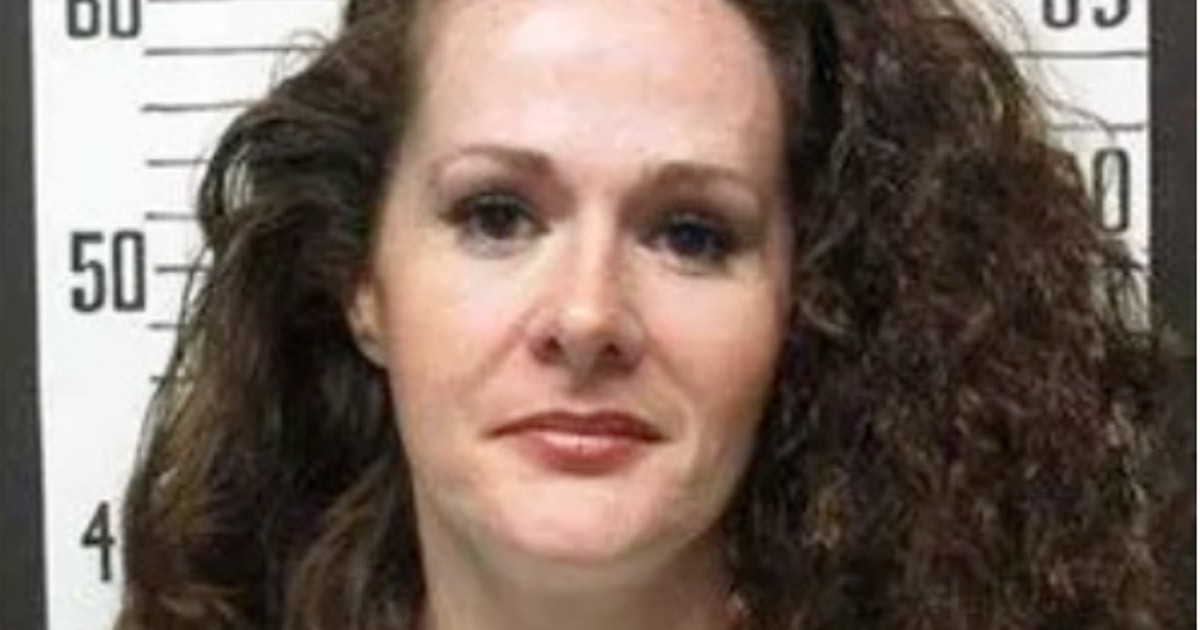
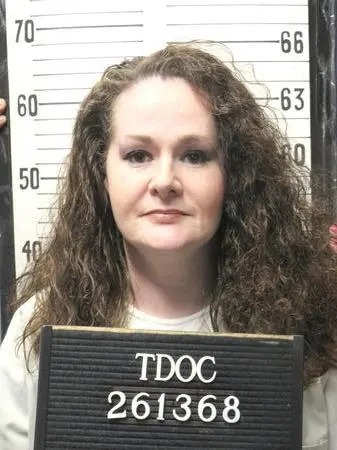
For more than three decades, Christa Gail Pike has lived under a sentence that few people ever experience.

She was 18 years old when she became involved in the 1995 killing of fellow Job Corps student Colleen Slemmer in Knoxville, Tennessee.

Now 50, Pike remains the only woman on Tennessee’s death row.

Unless a court or state authority intervenes, Tennessee plans to carry out her execution on September 30, 2026, at Riverbend Maximum Security Institution in Nashville.

If the execution proceeds, Pike would become the first woman executed by the state of Tennessee in more than 200 years. She would also be the only person executed by Tennessee in the modern death-penalty era for a crime committed at age 18, according to the Death Penalty Information Center.

The case has attracted renewed attention not only because of Pike’s unusual place in Tennessee’s death-penalty history, but also because of the legal battle surrounding the state’s planned execution procedure.

A Case That Began More Than 30 Years Ago

images (17)

In January 1995, Pike was an 18-year-old student at a Job Corps career-training center in Knoxville.

She was dating fellow student Tadaryl Shipp, who was 17 at the time.

Prosecutors said Pike became involved in the killing of 19-year-old Colleen Slemmer, another student whom Pike viewed as a romantic rival.

Pike was subsequently convicted of first-degree murder and sentenced to death in 1996.

Two other teenagers were also prosecuted in connection with the case. Shipp received a life sentence, while Shadolla Peterson testified against Pike and received probation, according to the Death Penalty Information Center.

The circumstances surrounding the case have remained part of the legal debate over Pike’s sentence for years.

Her attorneys have argued that important information about her childhood, mental health and traumatic experiences was not adequately presented to the jury that sentenced her.

A 2021 filing in the Tennessee courts argued that Pike had experienced severe trauma and mental-health difficulties that were not fully presented during her original trial.

Those arguments, however, have not resulted in the death sentence being overturned.

Tennessee Set an Execution Date

https_3A_2F_2Fmedia.zenfs (1)

The Tennessee Supreme Court formally set Pike’s execution date on September 30, 2025.

The court rejected Pike’s request for a certificate of commutation and ordered that the sentence be carried out on September 30, 2026, unless another court or appropriate authority intervenes.

The order also directed the warden of Riverbend Maximum Security Institution to notify Pike of the execution method by August 28, 2026.

That deadline has now passed.

The Tennessee Department of Correction subsequently confirmed that the state is proceeding with preparations for the scheduled execution. On August 31, the department announced that it had begun accepting applications for media witnesses. The execution is scheduled for 10 a.m. Central Time on September 30.

That does not mean every legal issue surrounding the case has ended.

Pike’s attorneys have continued challenging aspects of the state’s execution procedure.

Why Pike’s Medical Condition Became Part of the Legal Battle

One of the most recent disputes has centered on Tennessee’s lethal-injection procedure and Pike’s medical condition.

Her attorneys argued that Pike has thrombocytosis, a condition involving elevated platelet levels, and that the condition could create additional risks during the procedure.

They also raised concerns about access to a suitable vein for intravenous medication.

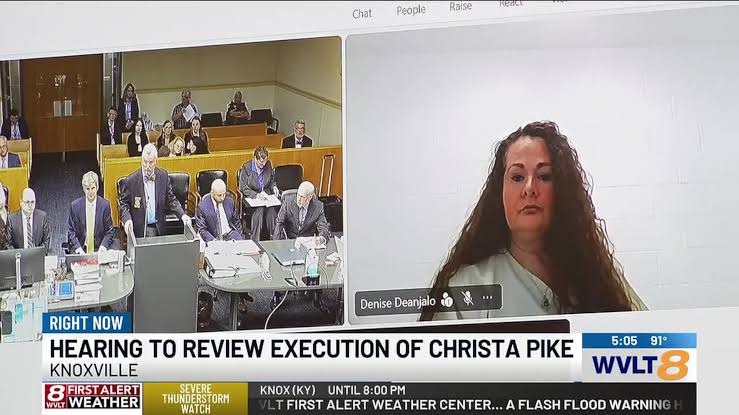
The legal challenge prompted a multi-day evidentiary hearing in Knox County in August.

According to the Death Penalty Information Center, testimony focused on whether Pike’s medical condition could create an unconstitutional risk during lethal injection and whether the procedure could expose her to severe pain.

The state disputed those concerns.

State experts argued that Pike’s veins were accessible and pointed to previous successful blood draws as evidence that medical staff should be able to establish intravenous access.

The state also maintained that the medication used in the procedure would cause unconsciousness before severe pain could be experienced.

Senior Judge W. Mark Ward, who was appointed as special master for the proceedings, ultimately rejected the central arguments raised against the procedure.

The court found that Pike had not demonstrated that her medical condition would prevent prison officials from establishing an IV.

The decision represents another setback for Pike’s legal team as the execution date approaches.

Lawyers Proposed Other Options

Pike’s attorneys also discussed alternatives to the state’s planned procedure.

Among their arguments was the possibility of using a central-line IV rather than a standard peripheral IV.

They also proposed hanging as an alternative method.

The court rejected hanging, noting concerns about safety as well as the fact that Tennessee’s prison system does not maintain the equipment or personnel necessary to carry out an execution by that method.

The legal dispute illustrates how execution cases can involve not only questions about guilt and sentencing, but also detailed constitutional and medical arguments about the procedure itself.

For Pike, those questions have become especially important as the September 30 date draws closer.

More Than Three Decades on Death Row

images (16)

Pike has now spent roughly three decades under a death sentence.

Her case is unusual because of how young she was when the crime occurred.

She was legally an adult at 18, but the question of youth has remained an important part of arguments seeking a different sentence.

The Death Penalty Information Center notes that, if executed, Pike would become the only person Tennessee has executed in the modern death-penalty era for a crime committed at age 18, 19 or 20.

Her attorneys have also pointed to the difference between her sentence and those received by the other young people involved in the case.

Those arguments have appeared repeatedly in efforts to obtain commutation or further review.

For the courts that have considered the matter, however, Pike’s conviction and death sentence have remained in place.

A Buddhist Advisor Will Be Allowed to Be Present

Amid the legal disputes, one request from Pike has received a different response.

Pike asked for her Buddhist religious advisor to be permitted inside the execution room.

According to reporting on the recent proceedings, an agreement had already been reached allowing the advisor to be present.

That means Pike will have access to her chosen spiritual adviser during the final moments of the state’s process.

The accommodation reflects another dimension of modern death-penalty cases: the constitutional and personal questions surrounding religious practice at the end of a prisoner’s life.

The Historical Significance of the Case

images (15)

If the execution takes place as scheduled, its significance will extend beyond Pike herself.

Tennessee has not executed a woman in more than two centuries.

The Death Penalty Information Center says the state’s last execution of a woman occurred in the early 19th century.

That makes Pike’s case historically unusual even within the small group of women who have received death sentences in the United States.

Women represent a small minority of people sentenced to death and executed in the modern United States.

The Death Penalty Information Center notes that women have accounted for only a small fraction of modern executions, highlighting how unusual Pike’s position is within the American death-penalty system.

Her case also raises broader questions about how the justice system treats people who commit serious crimes when they are very young adults.

Those questions become especially complicated when decades have passed between the original conviction and the scheduled punishment.

The Case Is Not Over Yet

Although September 30 remains the scheduled date, an execution date is not necessarily the end of the legal process.

Courts can consider additional filings, and governors may have authority to grant clemency in appropriate circumstances.

Pike’s attorneys have continued pursuing legal avenues challenging her sentence and the state’s execution procedures.

Her case remains active in Tennessee’s court system. The Tennessee appellate docket shows filings continuing into late August 2026.

That means the situation could still change before September 30.

For now, however, Tennessee is proceeding as though the execution will take place.

The state has begun preparations, including the process for selecting media witnesses, and the Department of Correction has publicly listed September 30 as the scheduled date.

A Case That Forces Difficult Questions

The story of Christa Pike is difficult precisely because it contains several questions that do not have simple answers.

There is the original crime and the suffering experienced by the victim and her family.

There is also the question of what punishment is appropriate for a person who committed that crime at 18.

There are questions about mental health, childhood trauma, rehabilitation, proportionality and the purpose of capital punishment.

And now there are questions about whether Tennessee’s planned execution procedure can be carried out safely and constitutionally.

Pike’s supporters argue that her age at the time of the crime, traumatic childhood and mental-health history should be considered when determining whether she should remain under a death sentence.

Opponents of clemency argue that the seriousness of the crime and the jury’s original sentence must also be respected.

The courts have so far allowed the death sentence to stand.

September 30 Is Now on the Calendar

For Christa Pike, September 30 has become more than a date.

It is the date Tennessee has officially selected for the conclusion of a case that began when she was an 18-year-old student in Knoxville.

For more than 30 years, her name has remained associated with one of Tennessee’s most closely watched death-penalty cases.

Now, as the state prepares for the scheduled execution, the legal questions surrounding her sentence and the method of execution continue to unfold.

If no court or state authority intervenes, Pike will become the first woman Tennessee has executed in more than 200 years.

But until the scheduled date arrives, the case remains subject to the legal system that has followed it for decades.

And that is ultimately what makes this story larger than a single execution date.

It is a story about how the justice system responds to serious crimes, how it weighs the actions of someone who was barely an adult, and how society continues to debate the meaning and limits of the death penalty.

Whatever happens on September 30, Christa Pike’s case will remain an unusual chapter in Tennessee’s legal history.

Sources

  1. Tennessee Supreme Court — Order setting Christa Pike’s execution date.

  2. Tennessee Courts — State of Tennessee v. Christa Gail Pike case history.

  3. Tennessee Department of Correction — Scheduled execution and witness information.

  4. Death Penalty Information Center — Background on Christa Pike and Tennessee’s first woman execution in more than 200 years.

  5. Death Penalty Information Center — Recent hearing concerning Pike’s lethal-injection challenge.

  6. Tennessee Supreme Court — Historical appellate records involving Christa Pike.

  7. Amnesty International — Current information regarding Pike’s scheduled execution and clemency campaign.