Top Ad 728x90

samedi 29 ao没t 2026

My 13-year-old daughter brought a starving classmate home for dinner… and days later, something fell out of that girl’s backpack that I wish I hadn’t seen. “She’s eating with us.” My daughter, Sam, didn’t ask. She stated it. I stood at the stove, already trying to make dinner stretch for four. Now there were five. The girl behind her looked like she wanted to vanish. Oversized hoodie in the heat. Shoes worn thin. Eyes glued to the floor. “This is Lizie,” Sam said. I forced a smile. “Hey… grab a plate.” In my head, I adjusted portions. Less meat. More rice. Maybe no one would notice. Dinner was quiet. My husband tried to talk. Lizie answered softly, barely audible. But she ate. Slow. Careful. Like every bite mattered. She kept drinking water. Every small sound made her tense. When she left, I turned to Sam. “You can’t just bring people home like that. We’re barely managing.” “She didn’t eat all day.” “That doesn’t—” “She almost fainted again,” Sam said. “Her dad’s working nonstop. Hospital bills. Their power was out last week.” I stopped. “She passed out at school today. They told her to eat better. But she only eats lunch.” I sat down. I had been worried about portions. She was just trying to make it through the day. “Bring her back,” I said quietly. “Tomorrow?” “Yeah.” She came back. Then again. And again. It became normal. Homework at the counter. Dinner. Then she’d leave. She never asked for anything extra. Never complained. She just ate. One evening, her backpack slipped off her shoulder and hit the floor. Something fell out. Not books. Not papers. I bent down and picked it up. And the second I saw it… my heart dropped. What she had been carrying this whole time wasn’t something I was ready to see… continue in the comments. Type “YES” and tap like to reveal the full story.

by


Off The Record My 13-Year-Old Brought A Starving Classmate Home—Then I Saw What Was In Her Backpack


I stood in my kitchen looking at my thirteen-year-old daughter.


Dan moved to Sam’s shoulder. “Is that true, Sammie? All of it?”


She nodded. “Today she actually sat down on the gym floor for a minute during the mile. The teacher told her to eat better.” Sam looked at me steadily. “She eats lunch at school when the lunch program covers it. That’s not every day.”


The room tilted slightly.


I thought about the dinner I had just served and the careful portions Lizie had taken and the way she drank two full glasses of water.


“I’m sorry,” I said to Sam. “I shouldn’t have come at you like that.”


Sam’s expression softened just slightly. “I told her to come back tomorrow.”


“Okay,” I said. “Bring her.”


Source: Unsplash

She Came Back the Next Night and the Night After That — and by Friday She Was Doing Dishes and Humming at the Kitchen Sink

I made extra pasta the next evening, seasoning the sauce with the particular anxiety of a person who is trying to do the right thing and hoping the grocery budget will allow it.


Lizie came back, hugging her backpack. She cleaned her plate and then carefully wiped her section of the table before anyone could ask her to.


By the end of the week she was a quiet fixture. She and Sam did homework at the counter. She washed dishes without being asked. One evening she fell asleep sitting at the counter, jerked awake, and apologized three times for it.


Dan caught my arm in the hallway.


“Should we call someone? She needs real help, right?”


“And say what?” I whispered. “That her dad’s broke and she’s exhausted? I don’t know how to handle this, Dan. I really don’t.”


“She looks like she hasn’t slept.”


“I know. I’ll talk to her. Gently.”


Over the weekend I tried to find out more from Sam.


Sam shrugged. “She doesn’t say much about home. Just that her dad works a lot. The power gets shut off sometimes for a few days. She pretends it’s not a big deal, but she’s always tired, Mom. And always hungry.”


On Monday, Lizie arrived looking paler than usual. When she pulled out her homework at the kitchen counter, the backpack tipped off the chair and hit the floor.


The Backpack Burst Open and the Papers Scattered Across the Linoleum — and I Knelt Down to Help and Saw What She Had Been Carrying

Papers everywhere. I moved to gather them and that’s when I saw it.


Crumpled bills. An envelope with coins. A shutoff notice stamped FINAL WARNING in red ink. And a battered notebook that had fallen open to a page covered in careful handwriting.


The word EVICTION was written at the top.


Beneath it, a list. What we take first if we have to leave.


“Lizie,” I said. I could barely get the words together. “What is this?”


She froze. Her fingers went to the hem of her hoodie.


Sam had come in behind me. “Lizie. You didn’t tell me it was this bad.”


Dan appeared in the doorway, reading the room before reading anything else.


I held up the envelope. “Sweetheart. Are you and your dad in danger of losing your home?”


She stared at the floor. When she finally spoke, her voice was so quiet I had to lean forward.


“My dad said not to tell anybody. He said it’s nobody’s business.”


“Lizie, that’s not quite true,” I said. I kept my voice the way I kept it during Sam’s worst nights, the years when she was small and afraid of things I could not see. “We care about you. But we can’t help if we don’t know what’s happening.”


She shook her head. Tears were building but not falling, like she had learned that crying used up energy she didn’t have.


“He says if people know, they’ll look at us differently. Like we’re begging.”


Dan crouched down beside us, bringing himself to her level.


“Is there anywhere else you could stay? Family? A friend?”


“We tried my aunt. She has four kids in a two-bedroom place. There wasn’t room.”


Sam sat down beside her. “You don’t have to keep this hidden from us. We’ll figure something out together.”


I nodded. “You’re not alone in this. Not anymore.”


Lizie was quiet for a long moment. Then she looked at the cracked screen of her phone.馃憠 Read the Full Story


“Should I call my dad? He’s going to be upset I said anything.”


“Let me talk to him,” I said. “All we want is to help.”


Paul Came to the Door with Oil Stains on His Jeans and Exhaustion on His Face — and He Tried to Smile Anyway

He shook Dan’s hand at the door with the careful dignity of a man who has not stopped working even while everything around him has been collapsing.


“I’m Paul. Thank you for feeding her. I’m sorry for the trouble.”


“Helena,” I said. “And it hasn’t been any trouble, Paul. But Lizie is carrying things no child should carry.”


He glanced at the papers on the table. His jaw tightened.


“She had no business bringing that here.”


Then his face did something I recognized — it crumpled the way faces crumple when the thing a person has been holding together comes apart in the wrong moment in front of the wrong people, which is to say any moment and any people.


“I thought I could fix it. I just needed more time. If I worked more hours—”


“She needs more than longer hours, Paul,” Dan said. Not harshly, but directly. “She needs food and sleep and the chance to just be a kid. Right now she’s planning evacuation lists.”     Paul ran both hands through his hair. He sat down at my kitchen table because his legs seemed to require it.


“Her mom died two years ago,” he said quietly. “I promised I’d keep her safe. I didn’t want her to see me fail at that.”


“She’s already seeing it,” I said, as gently as I could manage. “She’s just been protecting you from knowing that she is.”


The kitchen was very still.


Dan pulled out a chair across from him. “So. What do we do now?”


The Night Ended With Phone Calls and Plans — and None of It Was a Miracle, but All of It Was Something

After Paul left with Lizie — who hugged Sam at the door with the fierce grip of someone who has not been held very much recently — I started making calls.


The school counselor first. Then my neighbor Carla, who volunteers at the county food pantry and knows how to navigate that system without making anyone feel like a charity case. Then, with Dan’s coaching, a call to Lizie’s landlord.


Dan drove to the grocery store with food vouchers we had been holding. Sam baked banana bread with Lizie the following afternoon, the two of them filling our kitchen with flour and noise and actual laughter.


A social worker came by and asked careful questions. The landlord met with Paul and worked out an arrangement — maintenance work on the building in exchange for a payment plan on what was owed. It was not a simple solution, but it was a workable one.


At school, the counselor admitted they should have asked more questions earlier. Lizie was enrolled in the free lunch program with proper documentation, not the uncertain coverage she had been navigating on her own. Real support was arranged.


The food bank was harder. Paul’s pride, Dan told me, was the kind of pride that develops in men who have spent their lives being capable, and having to receive help felt like the final admission of failure.


“We can’t push him faster than he’s ready,” Dan said.


But Lizie was the one who finally got through.


She looked at her father during a quiet moment in our kitchen and said, “Please, Dad. I’m tired.”


He went with Dan to the food bank the next Saturday.


Source: Unsplash

The Fridge Was Never Full — but There Was Always Enough for One More, and Eventually That Became the New Math

Weeks passed.


Sam’s grades went up. Lizie was tutoring her in algebra three evenings a week, her voice getting a little stronger each session, a little more certain of its right to take up space. Lizie made the honor roll and Sam taped the notice to our refrigerator with the specific pride of someone who considers another person’s achievement their own.


She started laughing in our kitchen. Not the polite, careful kind — the unguarded kind that catches you off guard and fills the room.


I stopped counting chicken slices. I started counting smiles instead.


One evening, after dinner had been cleared and Dan was washing up, Lizie stayed at the counter. She was doing what she often did — pulling her sleeves down to her knuckles, the way she had that first night — but the rest of her posture was different now. Less braced. More settled.


“Something on your mind, sweetheart?” I asked.


She considered it. “I used to be scared to come here,” she said. “Like I was taking something that wasn’t mine.”


“And now?”


“Now it just feels safe.”


Sam was at the counter beside her. “That’s because you haven’t seen Mom on laundry day.”


Dan turned from the sink. “Let’s absolutely not open that subject.”


Lizie laughed. I packed a lunch for the next day and handed it to her, and she took it and then wrapped her arms around me and held on for a moment.


“Thank you, Aunt Helena. For all of it.”


“Anytime,” I said. “You’re family here.”


After She Left, I Stood in the Kitchen and Told My Daughter Something I Had Been Feeling for Weeks

The house was quiet the way it got quiet after Lizie left — not empty, just returned to its usual three-person frequency.


Sam was watching me with an expression I recognized. The particular pride she had been developing, the quiet version, the kind that doesn’t need an audience.


“Hey,” I said. “I want you to know I’m proud of you. You didn’t just notice someone hurting. You did something.”


Sam shrugged in the way she shrugged when compliments made her uncomfortable. “You’d have done the same thing, Mom.”


I thought about that. About the Tuesday night when I stood at that stove counting chicken pieces and arguing with the math and almost said you can’t just bring people home without asking. About the way the math had looked impossible and then turned out, somehow, to be manageable.


Maybe she was right. Maybe I would have done the same. But she hadn’t waited to find out. She had just done it.


That was not something I had taught her. That was something she had figured out herself, in a gym class, watching a girl sit down on the floor because she had run out of fuel, and deciding that she was not going to file it under someone else’s problem.


I had been so busy worrying about enough — enough food, enough money, enough of everything — that I had almost missed the lesson my own daughter was living out in front of me.


Enough, it turned out, was more elastic than I thought. It stretched in directions I had not accounted for. It could cover one more plate without anyone going hungry. It could cover one more person without making the rest of us smaller.


The next day, Sam and Lizie came through the back door in the late afternoon with the particular noise that two teenagers make when something funny has happened between them and they have not finished laughing about it yet.


“Mom, what’s for dinner?”


“Rice and whatever I can stretch,” I said.


And I set out four plates.


I didn’t think about it. I just did it.


Did this story reach you somewhere real? Let us know what you think in the comments on the Facebook video — we genuinely love hearing from you. And if this moved you, please share it with your friends and family. Some stories deserve to travel as far as they can.



The search for 18-year-old twins Carolina and Luiz

by


The search for 18-year-old twins Carolina and Luiza is over, they were dea… See more

The Search for Carolina and Luiza: A Tragic End That Raises Difficult Questions

When news first broke about the disappearance of 18-year-old twins Carolina and Luiza, it sparked immediate concern and a wave of hope that the story would end in relief. Two young lives, just beginning adulthood, suddenly gone without explanation—it’s the kind of situation that grips communities and travels quickly across borders through social media and news outlets. People shared their photos, reposted appeals, and followed every update, hoping for good news.

Now, that search has come to a devastating end. Authorities have confirmed that Carolina and Luiza were found dead, closing the chapter on the search effort but opening a much heavier one filled with grief, unanswered questions, and reflection.

A Story That Captured Attention

Cases involving missing young people often resonate deeply, but there was something especially striking about this one. Perhaps it was the fact that they were twins—two individuals who had shared not only a birthday but a life path up to that point. Perhaps it was their age, standing at the threshold between adolescence and adulthood, a time typically associated with possibility, independence, and future plans.

As details of their disappearance circulated, people began to piece together what little was known. Reports suggested they had last been seen under circumstances that were not immediately alarming, which made their sudden absence even more confusing. Family members spoke publicly, expressing fear but also holding onto hope. Volunteers joined search efforts. Online communities mobilized.

In many ways, the case followed a familiar pattern: initial confusion, escalating concern, and widespread attention. But familiarity does not lessen the emotional weight. If anything, it highlights how often such tragedies occur—and how rarely they end the way people hope.

The Emotional Toll on Families

While public attention tends to focus on the mystery and investigation, the center of any case like this is the family. For the relatives of Carolina and Luiza, the days between disappearance and discovery must have been agonizing. Uncertainty is its own form of trauma—the inability to know what has happened, combined with the fear of the worst.

Families in these situations often live in a suspended state, caught between hope and dread. Every phone call matters. Every update from authorities carries enormous emotional weight. At the same time, they must navigate public attention, media inquiries, and the constant replaying of events leading up to the disappearance.

When the outcome is tragic, the emotional impact shifts but does not lessen. Grief replaces uncertainty, but questions often remain. What happened? Could it have been prevented? Were there warning signs? These are not just investigative questions—they become deeply personal ones for those left behind.

The Role of Social Media

One notable aspect of this case, like many in recent years, is the role of social media. Within hours of the twins being reported missing, their images and names spread widely. Platforms became tools for awareness, allowing people far beyond their immediate community to participate in the search effort.

This kind of visibility can be powerful. In some cases, it has directly contributed to finding missing persons. It also creates a sense of collective involvement—people feel they are helping, even if only by sharing information.

However, social media also has limitations and risks. Information can spread faster than it can be verified. Rumors can take hold. Speculation can overshadow facts. In sensitive situations, this can complicate investigations or add additional stress to families.

In the case of Carolina and Luiza, the online response reflected both the best and most challenging aspects of digital engagement: widespread empathy and attention, but also the rapid spread of incomplete information.

Understanding the Broader Context

While each case is unique, tragedies like this often raise broader concerns about safety, vulnerability, and the systems in place to protect young people. At 18, individuals are often navigating new freedoms—traveling independently, forming new social circles, and making decisions without the same level of oversight they had as minors.

This transition period can come with risks. Lack of experience, combined with trust in unfamiliar situations, can sometimes lead to dangerous outcomes. It is not about assigning blame, but about recognizing the complexity of this stage of life.

Communities and institutions often respond to such cases by reexamining safety measures. Are there enough resources for missing persons investigations? How quickly are cases escalated? What support is available to families? These are important questions that extend beyond any single incident.

The Investigation and Its Challenges

Details about the investigation into Carolina and Luiza’s deaths may continue to emerge over time. In many cases, authorities must balance transparency with the need to preserve the integrity of their work. This can lead to periods where little information is publicly available, which can be frustrating for those following the case.

Investigations into deaths following disappearances can be particularly complex. They often involve reconstructing timelines, analyzing digital footprints, and conducting forensic examinations. Each piece of evidence must be carefully evaluated to build an accurate understanding of what happened.

For the public, it can be tempting to fill in gaps with assumptions. But real investigations rarely move as quickly or cleanly as people expect. Patience, while difficult, is essential to ensuring that conclusions are based on facts rather than speculation.

Grief Beyond the Immediate Circle

Although the deepest impact is felt by family and close friends, cases like this often affect entire communities. Schools, neighborhoods, and social groups can all experience a sense of collective loss. Even those who did not know Carolina and Luiza personally may feel a connection through the shared experience of following their story.

This broader grief reflects a basic human response: empathy. When young lives are lost, especially under unclear or tragic circumstances, it serves as a reminder of vulnerability and the unpredictability of life.

Public mourning can take many forms—vigils, memorials, online tributes. These acts are not just about remembering the individuals but also about processing the emotional impact as a group.

Moving Forward

As the immediate search has ended, attention will likely shift toward understanding what happened and seeking accountability if necessary. For the family, however, the process of grief will continue far beyond the news cycle.

It is important to recognize that closure is a complicated concept. Finding answers can help, but it does not erase loss. Healing, if it comes, does so gradually and differently for each person affected.

For the wider public, there is also a question of what comes next. Stories like this often fade from attention as new events take their place. But the underlying issues—safety, awareness, support systems—remain relevant.

Keeping the memory of Carolina and Luiza alive can take many forms, from advocating for better resources to simply remembering them as individuals rather than just a headline.

A Final Reflection

The story of Carolina and Luiza is, at its core, about two young people whose lives ended far too soon. It is also about the ripple effects of tragedy—the way it touches families, communities, and even strangers who followed their story from afar.

There is a natural desire to find meaning in such events, to extract lessons or explanations that make them easier to understand. But not all tragedies offer clear answers. Sometimes, what remains is a combination of grief, unanswered questions, and a renewed awareness of how fragile life can be.

What can be carried forward is the sense of shared humanity that emerges in moments like these—the willingness of people to care, to help, and to remember.

As more details become available, the focus will shift again, this time toward accountability and understanding. But for now, the most immediate reality is loss. And in that, the story of Carolina and Luiza becomes not just a news event, but a deeply human one.


Inside Susan Smith’s 30 Years in Prison (Parole Denied, Guard Scandals & Life Worse Than Death) A woman drowns her two babies. The jury spares her from death row, thinking they’re showing mercy. 30 years later, prison guards say that decision might have been the crulest thing they could have done to her. In November 2024, Susan Smith walked into her first parole hearing after three decades behind bars. What happened in that room and what’s happened to her since reveals something most people never think about when it comes to life sentences. Stick with me because by the end of this, you’re going to question everything you thought you knew about punishment. [music] Let me show you what 30 years in a concrete cage actually does to someone. October 25th, 1994. Susan Smith straps her sons into their car seats. Michael, 3 years old. Alexander, just 14 months. She drives to John D. Long Lake in Union County, South Carolina, and she releases the parking brake. The car rolls down the boat ramp. It takes 6 minutes for the Mazda to fill with water and sink. [music] Both boys still strapped in, drowning in complete darkness. Smith doesn’t call for help. She runs to a nearby house and tells them a black man in a tobogen hat carjacked her stole her car with her children inside. For 9 days, she’s all over television, crying, [music] begging for her babies to come home. Search parties comb the entire area. [music] Police pull over black man throughout South Carolina, hunting for a suspect who never existed. November 3rd, 1994. [music] Smith breaks. There was no carjacking. She murdered her own children. Prosecutors say she did it because the man she was seeing didn’t want kids messing up their relationship. She chose him over her sons. The trial takes less than a week. Jury convicts her in 2 and 1/2 hours. Then comes sentencing. Prosecutor Tommy Pope fights hard for execution. [music] He tells the jury point blank, “If a black man did this, you’d expect death. If the father did this, you’d expect [music] death. But the jury votes for life instead. Here’s what those jurors didn’t know. Under South Carolina law, anyone convicted before January 1996 was eligible for parole after 30 years. Smith made the cut off by months. The judge told the jury to interpret life in its plain and usual meaning. They thought she’d die behind bars. They were completely wrong. And that mistake created three decades of psychological torture that’s still playing out today. Look, if you’ve made it this far, you’re clearly not here for surface level content. Most people scroll past stories like this. You didn’t. That says something about you. [music] This channel digs into the cases no one else will touch the way we do. If that’s what you’re looking for, you know what to do. Smith starts her sentence at Camille Griffin Graham Correctional Institution. Within 5 years, everything falls apart. August 2000, she admits to sleeping with a 50-year-old prison guard named Houston Kagel four times on prison grounds. Kaggel pleads guilty, serves three months. A year later, Captain Alfred Row confesses to sleeping with Smith, too. Gets 5 years probation. Think about that. A woman convicted of drowning her children is manipulating the guards meant to supervise her. This isn’t romance. This is Smith using the only power she has left. She gets transferred to Leath Correctional Institution in Greenwood County. She’s been there for more than 24 years now. But the scandals don’t stop….Full Story Comment

by


Inside Susan Smith’s 30 Years in Prison (Parole Denied, Guard Scandals & Life Worse Than Death) A woman drowns her two babies. The jury spares her from death row, thinking they’re showing mercy. 30 years later, prison guards say that decision might have been the crulest thing they could have done to her. In November 2024, Susan Smith walked into her first parole hearing after three decades behind bars. What happened in that room and what’s happened to her since reveals something most people never think about when it comes to life sentences. Stick with me because by the end of this, you’re going to question everything you thought you knew about punishment. [music] Let me show you what 30 years in a concrete cage actually does to someone. October 25th, 1994. Susan Smith straps her sons into their car seats. Michael, 3 years old. Alexander, just 14 months. She drives to John D. Long Lake in Union County, South Carolina, and she releases the parking brake. The car rolls down the boat ramp. It takes 6 minutes for the Mazda to fill with water and sink. [music] Both boys still strapped in, drowning in complete darkness. Smith doesn’t call for help. She runs to a nearby house and tells them a black man in a tobogen hat carjacked her stole her car with her children inside. For 9 days, she’s all over television, crying, [music] begging for her babies to come home. Search parties comb the entire area. [music] Police pull over black man throughout South Carolina, hunting for a suspect who never existed. November 3rd, 1994. [music] Smith breaks. There was no carjacking. She murdered her own children. Prosecutors say she did it because the man she was seeing didn’t want kids messing up their relationship. She chose him over her sons. The trial takes less than a week. Jury convicts her in 2 and 1/2 hours. Then comes sentencing. Prosecutor Tommy Pope fights hard for execution. [music] He tells the jury point blank, “If a black man did this, you’d expect death. If the father did this, you’d expect [music] death. But the jury votes for life instead. Here’s what those jurors didn’t know. Under South Carolina law, anyone convicted before January 1996 was eligible for parole after 30 years. Smith made the cut off by months. The judge told the jury to interpret life in its plain and usual meaning. They thought she’d die behind bars. They were completely wrong. And that mistake created three decades of psychological torture that’s still playing out today. Look, if you’ve made it this far, you’re clearly not here for surface level content. Most people scroll past stories like this. You didn’t. That says something about you. [music] This channel digs into the cases no one else will touch the way we do. If that’s what you’re looking for, you know what to do. Smith starts her sentence at Camille Griffin Graham Correctional Institution. Within 5 years, everything falls apart. August 2000, she admits to sleeping with a 50-year-old prison guard named Houston Kagel four times on prison grounds. Kaggel pleads guilty, serves three months. A year later, Captain Alfred Row confesses to sleeping with Smith, too. Gets 5 years probation. Think about that. A woman convicted of drowning her children is manipulating the guards meant to supervise her. This isn’t romance. This is Smith using the only power she has left. She gets transferred to Leath Correctional Institution in Greenwood County. She’s been there for more than 24 years now. But the scandals don’t stop….Full Story Comment 馃憞馃憞


Unlike death row inmates who know their fate, Smith lives with false hope. She can dream about freedom, imagine life outside those walls, tell herself, “Maybe next time they’ll show mercy.” But that hope is almost certainly a lie. It’s a cruel trick her mind plays to make the unbearable somewhat bearable. She’s 53 years old now.


She was 23 when convicted. [music] She spent more of her adult life in prison than in freedom. If she lives to 73 or 83, she’ll have spent 50 or 60 years behind bars for a crime she committed when she was barely an adult. Every milestone other people experience, careers, marriage, families, travel, just living, will be completely absent from her existence.


Her transformation after the parole denial proves how psychologically damaged this sentence has made her. For years, she kept up a facade because parole seemed possible. When that hope was crushed, the broken, angry, bitter reality emerged. And she has decades more of this ahead of her. I want to be straight with you.


If you’ve watched this far, you’re not a casual viewer. You’re someone who wants to understand the real story, not just the headlines. We don’t cover these cases for clicks. We cover them because they matter. If that aligns with you, don’t sit on the sidelines. Be part of it. The jurors who spared her from execution thought they were being merciful.


They thought life in prison meant time to reflect, to feel remorse, to suffer appropriately. What they actually gave her was something far more devastating. 30 years and counting of waking up every day as the woman who drowned her babies. 30 years of other inmates and guards looking at her with disgust. 30 years of disciplinary infractions, drug use, self harm, and desperate attempts to feel anything other than crushing guilt.


A lot of people believe life imprisonment is more humane than execution. They say death is too easy. Criminals should suffer for their crimes. [music] Taking the quick way out isn’t real justice. But after seeing what 30 years has done to Susan Smith, the question gets more complicated. A death penalty inmate knows their fate Appeals will eventually run out. One day it ends. There’s finality, certainty. But Susan Smith has already spent 30 years behind bars and will likely spend 30 more the same way. Waking in the same cell, following the same routine, never having privacy, never making real decisions, never experiencing life outside those walls again.

That’s not mercy. That’s a different kind of death. Slower, more painful, stretched across decades with no end except old age. As of January 2025, Susan Smith remains at Leaf Correctional Institution working as a wardkeeper assistant. No further violations since August 2024. But according to staff, her behavior and attitude have deteriorated significantly.

She’s become exactly what they describe as a nightmare to deal with. Her next parole hearing is November 2026. The cycle continues. Hope followed by crushing disappointment. every 2 years for the rest of her natural life. This is her existence now. A concrete cell, a daily routine, decades stretching ahead with no end in sight except eventual death behind bars.

So here’s the question I want you to sit with. After seeing what 30 years of life imprisonment actually looks like, after understanding the daily grinding reality of false hope and psychological deterioration, do you still believe this is more humane than execution? Is what Susan Smith is experiencing actually worse than death itself? Drop your thoughts below because this question matters.

[music] It affects how we think about justice, punishment, and what we consider humane, even for people who commit unthinkable crimes. Sometimes the alternative to death isn’t mercy. Sometimes it’s something far more cruel. And Susan Smith’s existence behind bars might be the perfect proof of that. If this made you think differently, if it challenged something you believed, that’s exactly why we do this.

Most creators won’t touch stories this uncomfortable. We do. [music] And if you want more of that, you already know what it means to be here. >> [music]


Justin Bieber admits that he tested positive for…

by


Celebrity headlines often spread rapidly online, especially when they involve a well-known figure like Justin Bieber. A post reading “Justin Bieber admits that he tested positi…” may immediately spark concern, but an incomplete headline does not provide enough information to determine what it is referring to.


Without additional context or a reliable source, it is impossible to accurately report the claim.

An Incomplete Headline Can Be Misleading

Social media posts frequently use truncated headlines to encourage readers to click for more information. In this case, the phrase “tested positi…” could refer to many different situations, including:

  • A medical test.
  • A routine health screening.
    • A substance test.
    • Another unrelated type of examination.

    The headline alone does not identify what was allegedly tested or when the event supposedly occurred.

    Incomplete headlines are a common feature of click-driven content. They often rely on:

    • Emotional language.
    • Curiosity-provoking wording.
    • Missing context.
    • “See more” links that withhold key details.

    These tactics encourage engagement but do not necessarily provide accurate or complete information.


He was in his cell, waiting to be executed, and he asked as a last, See!

by


He was in his cell, waiting to be executed, and he asked as a last, See!


The shadow of  the American carceral system falls longest and most heavily upon its youngest inhabitants. Within the sprawling network of federal and state  prisons, there exists a demographic that challenges the very moral foundations of modern jurisprudence:  children. In the United States, at least 79 individuals who were under the age of 14 at the time of their offenses are currently serving life sentences without the possibility of parole. This stark reality—the condemnation of a child to die in prison—has ignited a firestorm of national and international outrage, positioning the U.S. as a global outlier in its treatment of juvenile offenders.

To understand the gravity of this issue, one must first confront the sheer finality of the sentence. “Life without parole” (LWOP) for a 13-year-old is not merely a long prison term; it is a definitive statement by the state that a child is beyond redemption before they have even reached the mid-point of adolescence. Human rights organizations, including Human Rights Watch and the Equal Justice Initiative, argue that these sentences represent a fundamental violation of international human rights standards. They contend that such harsh penalties ignore the biological and psychological realities of childhood, where the brain is still in a state of rapid development and the capacity for impulse control is famously erratic.

The backgrounds of these children are rarely a mystery. Statistical data reveals a staggering correlation between juvenile life sentences and environments defined by systemic failure. Most of these children come from “radioactive” settings—homes fractured by extreme poverty, neighborhoods ravaged by violence, and lives marked by physical or sexual abuse. When a 12-year-old commits a violent act, advocates argue, the court is often looking at the culmination of years of trauma that the state failed to intercept. In this context, sentencing a child to life without parole is seen by many as a second failure: the first being the failure to protect the child, and the second being the refusal to believe in their potential for change. Prisons & Corrections

One of the most polarizing examples in American history is the case of Lionel Tate. In 1999, at the age of 12, Tate was responsible for the death of a six-year-old girl. Tate claimed they were “pro-wrestling” and that the death was a tragic accident during play. Despite his age and the lack of demonstrated premeditation, he was tried as an adult and became the youngest person in modern U.S. history to be sentenced to life in prison without parole. The image of a boy in a bulky orange jumpsuit, his feet barely touching the floor from the witness chair, became a symbol of a system that had lost its sense of proportion. Although Tate’s sentence was eventually overturned and reduced upon appeal, the case served as a catalyst for a national debate: at what age does a child stop being a child in the eyes of the law?To continue reading, click Next 

He was in his cell, waiting to be executed, and he asked as a last, See!


How Many Holes You See in This Skirt Determines if You’re a Narcissist

by


Internet puzzles have a way of turning the simplest image into a full-blown debate, and this skirt puzzle is a perfect example. At first glance, it looks easy. You see a skirt, a couple of obvious tears, and a question that seems straightforward: How many holes are in the skirt? But within seconds, people begin second-guessing themselves, zooming in, counting again, and defending totally different answers.
That is exactly why this image has become such a fun brain teaser online.
The puzzle asks viewers to count the holes in the skirt, with answer choices ranging from 2 to 7. Some people immediately say 2, because they only count the two large visible tears on the front. Others say 4, arguing that each visible tear goes through both the front and back of the fabric, so the total doubles. Then there are people who count the waistband opening and the bottom opening as well, which pushes the number even higher.What makes this kind of puzzle so addictive is that it tests more than eyesight. It also tests how you define the word hole. Are you only counting damaged areas? Are you counting every opening in the garment? Do the two drawstring openings near the waistband count too? That is where opinions split, and the comments usually become even more entertaining than the image itself.

One popular way to break it down is like this: there is one opening at the top where a person puts the skirt on, one opening at the bottom, and two visible tears on the fabric. If those tears go completely through the material, then they may count as four holes instead of two, because the front and back would both be torn. Some viewers also include the two small drawstring holes near the waistband. Depending on the logic used, the total changes fast.

That is why so many people arrive at different answers and still feel completely correct.
Of course, the line in the image that says the answer “determines if you’re a narcissist” is just clickbait-style humor. A picture puzzle cannot diagnose anyone’s personality, mental health, or character. The real purpose is simply to grab attention and make people curious enough to stop scrolling. And to be fair, it works.

These viral visual riddles do well because they create instant engagement. People love sharing their answer, defending it, and seeing whether others agree. Even when the puzzle has no official solution, it still succeeds because it starts conversation. In a way, that is the whole point. The image is less about being “right” and more about making people think twice about something they assumed was obvious.

Another reason puzzles like this spread so quickly is that they make viewers feel involved. Anyone can participate. You do not need special knowledge, advanced math, or deep analysis. All you need is a few seconds, a sharp eye, and a willingness to argue over tiny details.

So what is the best answer?
It depends on how strictly you define a hole. If you only count the large torn areas, you may say 2. If you count both sides of those tears, you may say 4. If you include the natural openings of the skirt and possibly the drawstring holes, your answer can rise even more. That is what makes the puzzle interesting: it is not just testing your eyes, but your reasoning.

In the end, the real challenge is not the skirt.


Save Your Home and Money: Always Unplug These 5 Appliances After Use” “I had no idea ”

by


Many households look for simple ways to lower utility costs and keep their homes as safe as possible, especially as energy prices rise and appliances become more complex. One of the easiest habits you can build is unplugging certain devices once you’re done using them. It may sound small, but for many appliances, it truly makes a difference.

Even when turned off, a surprising number of electronics continue drawing electricity. This quiet drain on power—often called standby or “phantom” energy—can add up. For many U.S. households, it can mean an extra $100 to $200 on the yearly electric bill. Beyond cost, some appliances can pose a safety concern if left plugged in for long periods, especially those that heat up or operate with older wiring.

To help reduce unnecessary energy use and protect your home, experts recommend unplugging the following items once you’re done with them. 

1. Space Heaters

Space heaters are convenient during colder months, but they require careful attention. Safety organizations note that they are among the most common sources of winter home fires, often because they are left too close to bedding, curtains, or furniture.

Modern heaters may include automatic shutoff features, but no safeguard is perfect. The safest approach is to turn them off and unplug them every time you leave the room and never run them while sleeping.

2. Clothes Dryers

Most people don’t realize that the electrical setup for a clothes dryer can still use a noticeable amount of power even when the appliance isn’t running. This can lead to unnecessary energy costs over the year.

If accessing the dryer’s outlet is inconvenient, consider using a smart power strip. With one switch, it can cut the power completely and prevent wasted energy. 

3. Hair Styling Tools

Flat irons, curling wands, and similar tools heat to very high temperatures—hot enough to damage surfaces or nearby items if left unattended. While some models include automatic shutoff features, they cannot always be relied on.

The safest routine is simple: unplug the tool immediately after use and store it in a heat-safe pouch, allowing it to cool away from fabrics, paper, or countertop clutter.

4. Toasters and Toaster Ovens

These small kitchen appliances seem harmless, but they can still pose safety risks. A buildup of crumbs can smolder, and in some cases, the lever or heating mechanism can malfunction even when the appliance appears off.

Cleaning the crumb tray regularly and unplugging the toaster or toaster oven after each use helps reduce both fire risk and electrical draw.

Other Everyday Appliances to Keep in Mind

While they may not require unplugging every time, a few everyday devices are worth managing thoughtfully:

• Phone chargers: They use little power but should be unplugged during storms or when not actively charging.
• Televisions and game systems: Many continue drawing energy while in standby mode. A power strip with an on–off switch can help.
• Coffee makers: If your model doesn’t have an automatic shutoff, unplugging it is a smart precaution.
• Microwaves: Generally safe to keep plugged in; their standby energy use is very small.

Tips to Build Safer Habits Creating a routine around unplugging appliances doesn’t need to be difficult. A few small adjustments can make it second nature:

• Use smart power strips for home offices, entertainment centers, and areas with multiple electronics.
• Label power cords as reminders, especially for seasonal items.
• Make it a habit to unplug heat-producing tools immediately after storing them or before leaving a room.

Unplugging the right appliances is more than a safety measure—it’s a simple way to protect your home, reduce energy bills, and enjoy peace of mind. You don’t need to disconnect every device you own, but being mindful of the ones that use the most energy or produce heat can make a meaningful difference.

Your home supports you every day. These small steps help you support it just as thoughtfully.

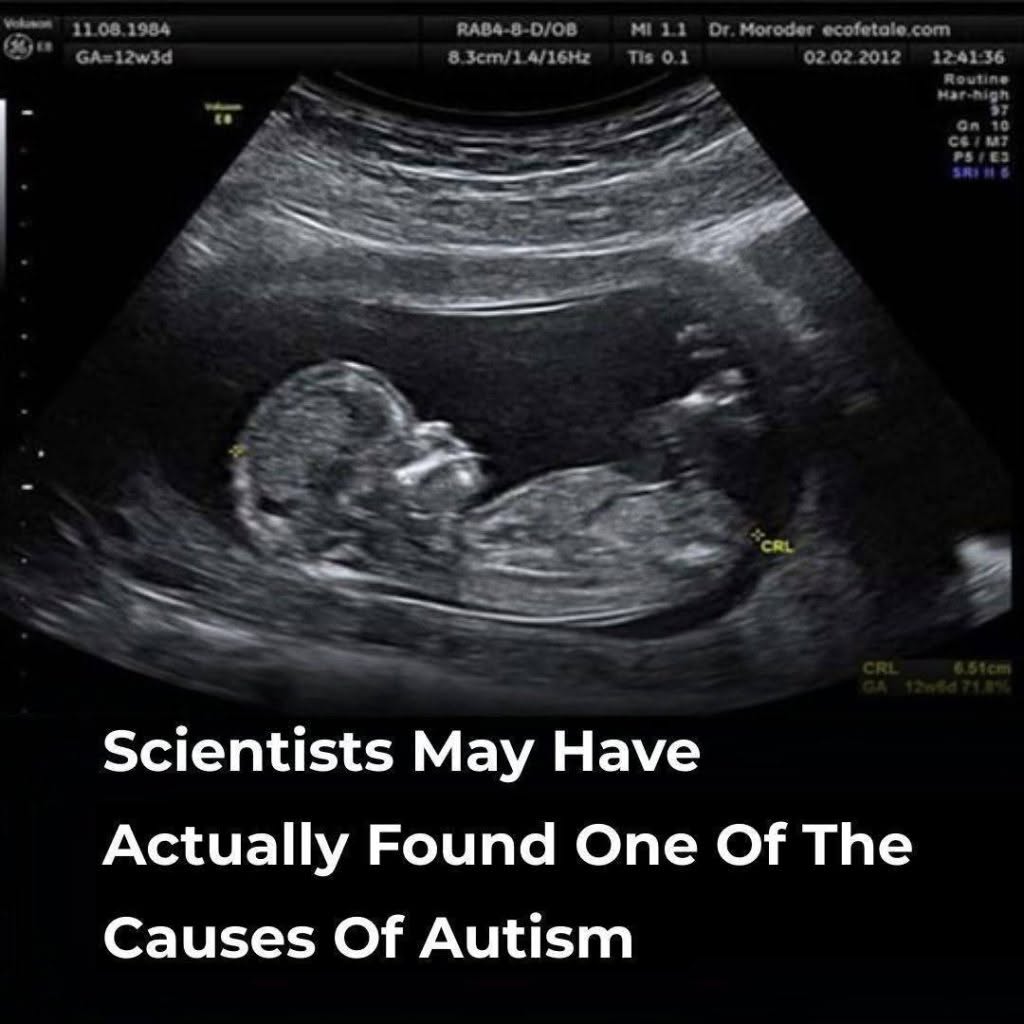
Scientists Explore a Potential Link Between Maternal Gut Health and Autism—But Here’s What We Actually Know

by


A recent study published in The Journal of Immunology has sparked conversation by suggesting that a mother’s gut microbiome—not her child’s—may influence neurodevelopmental outcomes in offspring, including behaviors associated with autism spectrum disorder (ASD). The research, led by Dr. John Lukens at the University of Virginia, points to a specific immune molecule, interleukin-17a (IL-17a), as a potential biological bridge between maternal gut bacteria and fetal brain development—in mice.

Flora& Fauna

I first saw the headlines when they started circulating on social media: “MOTHER’S GUT BACTERIA LINKED TO AUTISM!” The comments were filled with fear, guilt, and confusion. Pregnant women worried about their diets. New mothers wondered if they had done something wrong. Grandparents asked, “Is this why?”

But before we jump to conclusions, let’s separate hopeful science from hype.

This is not a story about blame. It’s not a story about certainty. It’s a story about possibility—about scientists asking important questions, conducting careful research, and slowly, incrementally, uncovering the complex factors that influence brain development.

Let me walk you through what the study actually found, what it didn’t find, and what it means for families today.

First, What Is the Gut Microbiome?


The gut microbiome is the community of trillions of bacteria, fungi, and other microorganisms that live in your digestive tract.

Flora& Fauna

What it does: Helps digest  food, produces vitamins, trains your immune system, and communicates with your brain (the “gut-brain axis”).

What influences it: Diet, stress, antibiotics, infections, environment, genetics.

Why it matters: Disruptions in the gut microbiome (dysbiosis) have been linked to various conditions: inflammatory bowel disease, allergies, obesity, depression, anxiety, and—yes—neurodevelopmental conditions.

But (and this is a big “but”), most of the research on the gut-brain axis has been done in mice. Human studies are far more complex.

The Study in Question (What the Scientists Actually Did)

Let me give you the facts.

The researchers: Dr. John Lukens and colleagues at the University of Virginia.

The journal: The Journal of Immunology (peer-reviewed, reputable).

The subjects: Mice. Not humans.

The finding: In pregnant mice, disruptions to the maternal gut microbiome triggered an increase in the immune molecule interleukin-17a (IL-17a). This molecule crossed the placenta and affected fetal brain development. The offspring showed behaviors reminiscent of autism (social interaction deficits, repetitive behaviors).

Flora& Fauna

The mechanism: The researchers identified a specific type of gut bacteria (segmented filamentous bacteria) that, when present in high levels, stimulated maternal immune cells to produce IL-17a.

The key point: This is a biological pathway—a potential mechanism—not a proven cause of autism in humans.

What the Study Does NOT Say [Very Important]  Let me be crystal clear about the limitations.

The study does NOT say: “Maternal gut bacteria cause autism.”

Anatomy

The study does NOT say: “If you have certain gut bacteria, your child will have autism.”

The study does NOT say: “Changing your diet during pregnancy can prevent autism.”

The study does NOT say: “Autism is caused by the mother.”

The study does say: “In mice, under specific laboratory conditions, maternal gut bacteria influenced offspring brain development via an immune molecule.”

That’s it. That’s what the  science supports.

Why Mouse Studies Are Important (But Not Definitive)

Let me explain why scientists use mice and why we should be cautious about applying mouse findings to humans.

Advantages of mouse studies:

Mice have similar immune systems to humans.

Health

Mice reproduce quickly, allowing for multi-generational studies.

Researchers can control the environment, diet, and  genetics.

Mice can be studied in ways that would be unethical in humans.

Limitations of mouse studies:

Mice are not humans. Their biology, gut bacteria, and immune responses differ.

Mouse studies often use inbred strains (genetically identical), while humans are genetically diverse.

Laboratory conditions (sterile, controlled) don’t reflect real-world complexity.

Findings in mice often fail to replicate in humans.

The bottom line: Mouse studies generate hypotheses. They tell scientists where to look next. They do not provide definitive answers about human health.

Health

What We Actually Know About Autism Risk Factors

Let me give you the current  scientific consensus.

Established risk factors for autism:

Genetics: Autism is highly heritable (estimates range from 50-90%). Hundreds of genes have been implicated.

Advanced parental age: Both older mothers and older fathers have slightly higher risk.

Premature birth and low birth weight: Increases risk modestly.

Maternal infections during pregnancy: Severe infections requiring hospitalization are associated with small increased risk (the mechanism may involve immune activation, as in the mouse study).

Maternal autoimmune conditions: Some studies suggest a link.

What is NOT a risk factor:

Vaccines (thoroughly debunked)

Parenting style (“refrigerator mother” theory is garbage science)

Science

Diet (no evidence that specific foods cause or prevent autism)

The big picture: Autism is complex. There is no single cause. Genetics play a large role. Environmental factors (including maternal immune activation) may contribute modestly, likely interacting with genetic vulnerability.

The Immune Connection (What the Science Says)

The immune system has been a focus of autism research for decades Known facts:


Maternal infection during pregnancy (especially severe infection requiring hospitalization) is associated with a small increased risk of autism in offspring.


Pregnancy& Maternity

Some children with autism have elevated levels of inflammatory markers.


Autoimmune conditions (in the mother) are slightly more common in families of children with autism.


What we don’t know:


Whether immune activation is a cause, a consequence, or a correlation.


Which specific pathogens (or immune molecules) are most relevant.


How genetics and environment interact.


The Lukens study fits into this larger body of research. It proposes a mechanism (maternal gut bacteria → IL-17a → fetal brain development) that is plausible and testable. But it has not been proven in humans.


What About the “Autism Epidemic”?


You’ve probably heard that autism rates are rising dramatically. Let me explain.


Learning& Developmental Disabilities

What’s true: Diagnosed autism rates have increased significantly over the past few decades.


What’s also true: Changes in diagnostic criteria, increased awareness, and reduced stigma account for most of the increase. Children who would have been labeled “odd,” “socially awkward,” or “intellectually disabled” in the past are now recognized as autistic.


What’s not true: There is no evidence of a true “epidemic” of new cases. Autism is not suddenly everywhere because of something in the environment.


What Pregnant Women Should Actually Know (Practical Advice)

Let me give you evidence-based guidance, not fear.


Do:


Eat a balanced diet (fruits, vegetables, whole grains, lean protein).


Take a prenatal vitamin with folic acid (essential for neural tube development).


Manage stress (meditation, gentle exercise, social support).


Get regular prenatal care.


Treat infections promptly (follow your doctor’s advice).


BiologicalSciences

Avoid alcohol, tobacco, and illicit drugs.


Don’t:


Obsess over your gut bacteria (you have little control over your microbiome composition).


Flora& Fauna

Blame yourself if your child is autistic (autism is not your fault).


Fall for “autism prevention” diets or supplements (no evidence they work).


Avoid necessary medications or vaccines out of fear.


The bottom line: There is no proven way to prevent autism. The best thing you can do is take care of your health—for your own sake and your baby’s.


A Note on Blame and Guilt

This is the most important section.


Parents of autistic children have been blamed for decades. In the 1950s and 1960s, the “refrigerator mother” theory claimed that cold, distant mothers caused autism. That theory was garbage. It caused immense harm. It has been thoroughly debunked.


Today, the blame has shifted. Now parents worry about their diet, their gut bacteria, their immune system, their age. The specifics change, but the message is the same: “You did something wrong.”


Flora& Fauna

Let me be clear: You did not cause your child’s autism. Autism is a neurodevelopmental condition with strong genetic underpinnings. You are a loving parent who deserves support, not blame.


If your child is autistic, you didn’t fail. You didn’t eat the wrong food. You didn’t have the wrong bacteria. You are not responsible.


Please release that guilt. It doesn’t serve you or your child.


Frequently Asked Questions

Should I take probiotics during pregnancy to prevent autism?

No. There is no evidence that probiotics (or any supplement) prevent autism. Talk to your doctor about whether probiotics are right for you for other reasons (digestive health, etc.).


Can I change my gut bacteria during pregnancy?

To some extent, yes (diet, probiotics, antibiotics). But we don’t know which specific bacteria are “good” or “bad” for fetal brain development. Don’t obsess.


Flora& Fauna

Does having a C-section increase autism risk?

Some studies suggest a very small increased risk, but the evidence is mixed and the effect is tiny. The benefits of C-section (when medically indicated) far outweigh any theoretical risk.


Does taking antibiotics during pregnancy increase autism risk?

Some studies have found a small association, but it’s unclear whether antibiotics themselves are the cause or whether the infections being treated are the cause. Follow your doctor’s advice.


My child is autistic. Was it something I did?

No. Autism is not your fault. Please be kind to yourself.


What can I do to support my autistic child?

Early intervention (speech therapy, occupational therapy, behavioral supports), acceptance, and love. Your child is not broken. They are neurodivergent. Help them thrive.


A Balanced, Hopeful Conclusion

Here’s what I want you to take away from this article.


The science of autism is complex. We don’t have all the answers. The study on maternal gut bacteria and IL-17a is interesting. It’s a clue, not a conclusion. It’s a hypothesis, not a breakthrough.


Flora& Fauna

But the most important thing to remember is this: autistic people are not tragedies. They are not “damaged” or “less than.” They are whole human beings with unique strengths, challenges, and perspectives.


Our goal should not be to prevent autism at all costs. Our goal should be to understand, support, and celebrate neurodiversity.


So let’s follow the science. Let’s ask good questions. Let’s avoid blame and guilt. And let’s create a world where autistic people can thrive—not because we “fixed” them, but because we accepted them.


Now I’d love to hear from you. Are you a parent of an autistic child? What do you wish people understood about autism? What questions do you have about the science? Drop a comment below – I read every single one.


And if this article helped you separate fact from fear, please share it with someone who might be worried. A text, a link, a conversation. Good information is the best antidote to hype. 馃К馃✨馃