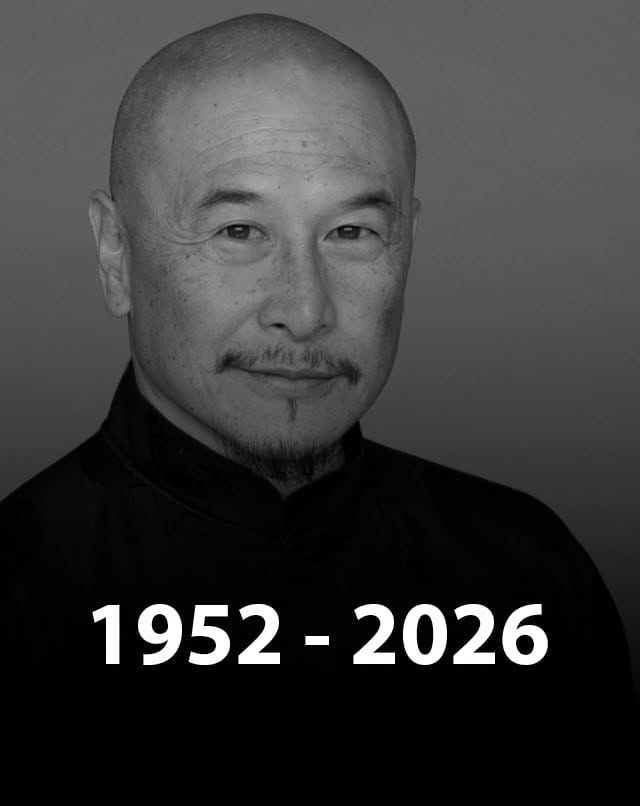
Hollywood Mourns the Loss of a Legendary Action Performer and Stunt Pioneer
Hollywood Mourns James Lew, the Legendary Action Performer and Stunt Pioneer
Hollywood and the martial arts community are remembering James Lew, a gifted performer whose extraordinary career helped redefine what audiences expected from action movies and television. Lew, who died in Los Angeles on August 23, 2026, at the age of 73, spent decades working both in front of and behind the camera. He was an actor, martial artist, stunt performer, stunt coordinator, fight choreographer, director, and mentor. His career became a bridge between traditional martial arts and modern Hollywood action filmmaking.
His passing has prompted renewed appreciation for the people who make some of cinema’s most spectacular moments possible—often without receiving the same recognition as the stars they double for.
A Career Built on Martial Arts
James Lew’s journey began with a deep commitment to martial arts.
He trained in numerous disciplines, developing the versatility and physical control that would eventually make him one of Hollywood’s most respected action professionals.
His abilities went beyond simply performing difficult movements. Lew understood timing, choreography, camera angles, safety, and the storytelling power of a well-designed fight sequence.
That combination made him especially valuable in an industry increasingly dependent on sophisticated action choreography.
From Martial Arts Competitions to Hollywood
Lew first gained attention in the martial arts world before establishing himself in entertainment.
According to the Martial Arts History Museum, he became known for pioneering the concept of the creative kata, bringing athleticism, showmanship, and innovation to competitive martial arts. He was later inducted into the museum’s Hall of Fame in 2002.
That experience translated naturally into film.
Hollywood action productions needed performers who could execute complicated movements while also understanding how those movements would appear on screen.
Lew proved to be exactly that kind of professional.
ADVERTISEMENT
A Familiar Face in Action Cinema
Although stunt performers frequently work outside the spotlight, Lew’s career included appearances in numerous recognizable productions.
His film credits included projects such as Star Trek, Action Jackson, Timecop, Lethal Weapon 4, Rush Hour, and Hot Shots! Part Deux. He also worked alongside major action stars, including Jet Li and others.
For audiences, some of his most memorable moments may have passed without them realizing who was responsible.
That is part of the unusual nature of stunt work.
The best stunt performer often disappears completely into the character and the scene.
The Man Behind the Action
Lew’s influence wasn’t limited to what audiences saw on screen.
He worked as a stunt coordinator and fight choreographer, helping design the physical action that other performers would eventually execute.
This required an entirely different set of skills.
A stunt coordinator has to think about performers, cameras, timing, equipment, locations, choreography, and safety simultaneously.
Every punch, fall, jump, vehicle movement, and fight sequence has to be carefully planned before cameras begin rolling.
Lew became highly respected for mastering that complicated process.
His Emmy-Winning Work
One of the highlights of Lew’s later career came with Marvel’s Luke Cage.
He earned a Primetime Emmy Award in 2017 for Outstanding Stunt Coordination for his work on the Netflix series.
The recognition was particularly meaningful because it celebrated the creative and technical work that normally happens behind the scenes.
For someone who had spent decades contributing to action filmmaking, the award represented an important acknowledgment of his craft.
More Than a Stuntman
Calling James Lew simply a stuntman doesn’t fully describe his career.
He performed.
He choreographed.
He coordinated.
He acted.
He directed and produced.
And he helped teach and inspire other performers.
His work demonstrated that action filmmaking is not simply about physical courage. It requires discipline, creativity, precision, and an understanding of visual storytelling.
A Connection to Generations of Action Stars
Over the course of his career, Lew crossed paths with some of the biggest names in martial arts and action entertainment.
His professional world included performers such as Jackie Chan, Jet Li, Steven Seagal, Jean-Claude Van Damme, Chuck Norris, and Brandon Lee.
That list reflects the extraordinary period of action cinema in which Lew built his career.
He belonged to a generation that helped bring martial arts choreography into mainstream American entertainment and demonstrated how powerful physical storytelling could be on screen.
A Legacy That Goes Beyond One Movie
Perhaps the most important part of Lew’s legacy is not any single film.
It is the influence of the craft itself.
Modern audiences have become accustomed to elaborate fight sequences, complex practical stunts, and highly choreographed action. Behind those moments are professionals who spend years learning how to make dangerous-looking scenes appear controlled and believable.
Lew was one of those professionals.
His career helped establish the idea that stunt work and martial arts choreography could be both athletic disciplines and sophisticated forms of filmmaking.
Remembered by the Stunt Community
Following news of his death, fellow members of the stunt and martial arts community paid tribute to Lew.
Fellow performer and longtime friend Simon Rhee remembered him as someone who had been part of his life for more than five decades and said he would be deeply missed by the stunt community.
Such tributes offer a glimpse into Lew’s importance beyond his professional credits.
For those who worked alongside him, he wasn’t simply another name on a production sheet.
He was a colleague, teacher, friend, and member of a community built around trust.
Why Stunt Pioneers Matter
The loss of James Lew also highlights a larger issue within Hollywood: many of the people responsible for the most memorable action sequences remain relatively unknown to the public.
Actors receive the applause.
Directors receive the headlines.
But stunt professionals often absorb the physical risks and spend years perfecting techniques that audiences may take for granted.
Hollywood has increasingly recognized that contribution. The Academy announced in 2025 that a competitive Oscar category for stunt design would be introduced, with the first award scheduled for the 100th Oscars in 2028.
That changing recognition makes the careers of pioneers such as Lew even more significant.
A Lasting Impact
James Lew’s career stretched across generations of entertainment.
He experienced the evolution from traditional martial arts movies to increasingly sophisticated Hollywood productions, while remaining involved in the physical craft that made action sequences convincing.
His accomplishments were built through decades of training, performance, choreography, and mentorship.
The films and television shows he worked on will continue to introduce new audiences to his work—even when they don’t immediately recognize his name.
The Bottom Line
James Lew’s death marks the passing of a remarkable figure in martial arts and Hollywood action filmmaking.
He helped create the kind of action sequences that audiences remember long after the credits roll, while also helping shape the performers and professionals working behind the scenes.
His legacy isn’t limited to a list of movie credits or an Emmy.
It lives in the movements he perfected, the sequences he helped create, and the generations of action performers influenced by his example.
Hollywood may have lost a stunt pioneer, but James Lew’s work will continue moving across the screen for years to come.


.png)


0 commentaires:
Enregistrer un commentaire