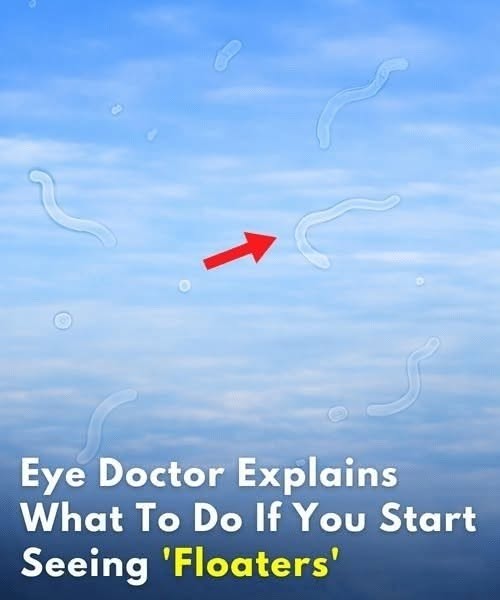
Have you ever noticed tiny dots, squiggly lines, or cobweb-like shapes drifting across your vision?
You may try to look directly at them, only to have them move away.
These are commonly known as eye floaters, and they can be surprisingly distracting—especially when you’re looking at a bright sky, a white wall, or a computer screen.
The good news is that most floaters are harmless. But when they appear suddenly or are accompanied by other changes in your vision, they can sometimes signal a problem that needs urgent attention.
What Exactly Are Eye Floaters?
Floaters are shadows cast by tiny structures or particles within the eye’s vitreous—the clear, jelly-like substance that fills the space between the lens and the retina.
They can look like:
- Small black or gray dots
- Threads or strings
- Squiggly lines
- Rings
- Cobweb-like shapes
They often seem to move when your eyes move and may drift away when you try to look directly at them.
Why Do Floaters Appear?
One of the most common reasons is normal age-related change.
As we get older, the vitreous gel gradually becomes more liquid and can pull away from the retina. This process, known as posterior vitreous detachment (PVD), is common with aging and is usually harmless. Floaters can also occur in connection with eye inflammation, bleeding inside the eye, eye injury, or after certain eye procedures.
Why Are They More Noticeable Against a White Wall?
You may notice floaters much more clearly when looking at something bright and uniform, such as a white ceiling or blue sky.
That’s because the shadows inside the eye become easier to see against a bright background.
This doesn’t necessarily mean that your floaters have suddenly become worse.
Sometimes you’re simply seeing them more clearly.
When Are Eye Floaters Usually Harmless?
If you’ve had the same small number of floaters for a long time, they’re not increasing, and your vision hasn’t changed, they are often not a serious problem.
Over time, your brain may also become better at ignoring them, making them less noticeable.
That doesn’t mean every new floater should be dismissed, however.
The Warning Signs You Should Never Ignore
The most important thing is to recognize a sudden change.
You should seek urgent eye-care assessment if you suddenly develop:
- A large number of new floaters
- A sudden “shower” of floaters
- Flashes of light
- A dark curtain or shadow across part of your vision
- Loss of peripheral vision
- Blurred or reduced vision
- Floaters after an eye injury or surgery
These symptoms can sometimes indicate a retinal tear or retinal detachment, conditions that can threaten vision if treatment is delayed.
Why Flashes Matter
Some people experience floaters together with brief flashes that can look like streaks of lightning.
Flashes can happen when the vitreous pulls on the retina.
Sometimes this occurs during a normal posterior vitreous detachment, but the same process can occasionally cause a retinal tear. That’s why new floaters combined with flashes deserve prompt evaluation.
What About the “Curtain” Effect?
One of the most important warning signs is the appearance of a dark curtain, veil, or shadow moving across your field of vision.
This can be a sign of retinal detachment.
If this happens, don’t wait to see whether it improves on its own. Seek emergency eye care immediately.
What Happens During an Eye Examination?
If you report new or concerning floaters, an eye-care professional may examine the back of your eye, often after dilating the pupils.
The purpose is to look carefully at the vitreous and retina and determine whether there is a retinal tear, detachment, bleeding, or another problem.
The examination is particularly important when symptoms appeared suddenly.
Do Eye Floaters Need Treatment?
Usually, no treatment is necessary for ordinary age-related floaters.
Many become less noticeable as the brain adapts to them.
However, persistent floaters that significantly interfere with vision can sometimes be evaluated for treatment. The appropriate approach depends on the underlying cause and the individual’s circumstances
Why Flashes Matter
Some people experience floaters together with brief flashes that can look like streaks of lightning.
Flashes can happen when the vitreous pulls on the retina.
Sometimes this occurs during a normal posterior vitreous detachment, but the same process can occasionally cause a retinal tear. That’s why new floaters combined with flashes deserve prompt evaluation.
What About the “Curtain” Effect?
One of the most important warning signs is the appearance of a dark curtain, veil, or shadow moving across your field of vision.
This can be a sign of retinal detachment.
If this happens, don’t wait to see whether it improves on its own. Seek emergency eye care immediately.
What Happens During an Eye Examination?
If you report new or concerning floaters, an eye-care professional may examine the back of your eye, often after dilating the pupils.
The purpose is to look carefully at the vitreous and retina and determine whether there is a retinal tear, detachment, bleeding, or another problem.
The examination is particularly important when symptoms appeared suddenly.
Do Eye Floaters Need Treatment?
Usually, no treatment is necessary for ordinary age-related floaters.
Many become less noticeable as the brain adapts to them.
However, persistent floaters that significantly interfere with vision can sometimes be evaluated for treatment. The appropriate approach depends on the underlying cause and the individual’s circumstances
Can You Prevent Eye Floaters?
There isn’t a guaranteed way to prevent normal age-related floaters.
However, protecting your overall eye health remains important.
Regular eye examinations can help detect eye conditions early, particularly for people with risk factors for eye disease.
Wearing appropriate eye protection during activities that could cause injury is also a sensible precaution.
Don’t Panic—But Don’t Ignore Sudden Changes
Seeing a few familiar floaters isn’t automatically a reason to panic.
The important distinction is between long-standing, stable floaters and new or rapidly increasing symptoms.
If you suddenly see many new floaters, flashes, a curtain-like shadow, or changes in your vision, don’t simply wait for the symptoms to disappear.
Get your eyes checked promptly.
The Bottom Line
Eye floaters are extremely common, and in many cases they’re simply a normal consequence of changes in the vitreous as we age.
But your eyes can sometimes give you an important warning.
A sudden increase in floaters—especially when accompanied by flashes or a dark curtain over your vision—requires urgent medical attention.
When it comes to sudden changes in vision, it’s better to have your eyes examined and discover that everything is fine than to ignore a symptom that could threaten your sight.


.jpg)


0 commentaires:
Enregistrer un commentaire